Ellie’s Revenge
SPOILER ALERT: Plot details for The Last of Us Part II and The Road follow.
SPOILER ALERT: Plot details for The Last of Us Part II and The Road follow.
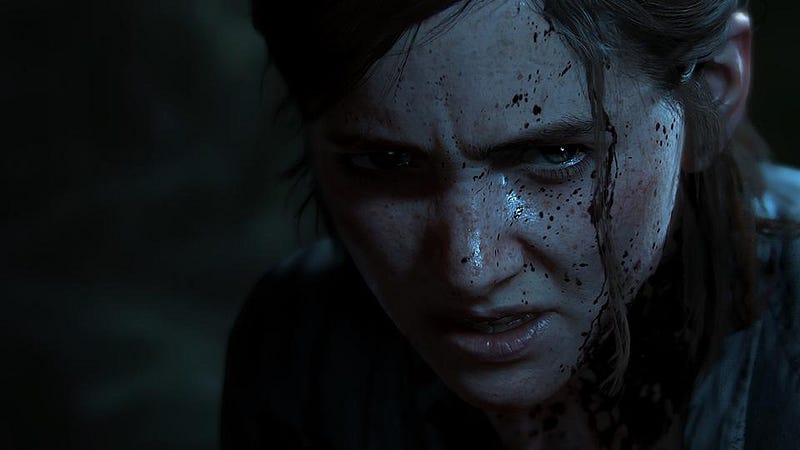
The Last of Us Part II is not a game you want to play twice. By the end of it, I was exhausted, but relieved that it had finally ended. Even the most jaded gamer won’t come out of it unscathed, either through frustration or through melancholy. The game is unsurprisingly divisive among players, with a notable gap between fans and critics. It is difficult for me to have a simple opinion on this sequel, as I find that all sides have valid points. Part II is a story of revenge and of redemption. It’s not a new story, but it’s a fitting one for this world. The execution, however, left me scratching my head.
Part II excels in many areas. The gameplay is more or less the same as that of the original. You carry an aresnal of weapons that you can customize or upgrade, with the added ability to build smoke bombs or trap mines. Most encounters with the enemy will be won with stealth, now made easier with the prone feature. You can sneak up on them from behind, or silently take them out from afar with a silencer. Sometimes, however, I found myself doing mad runs through areas just to get to the next checkpoint, which could be rather thrilling. There’s also plenty more to explore, though it’s mainly within the wide ruins of Seattle. A player could easily miss useful goodies scattered around. By far, though, the best part of the game was the Hitchcockian scouring of the hospital’s lower levels, the epicenter of the original outbreak. The sequence is genuinely scary because you aren’t sure of what’s hiding there, but you know that hordes of infected could pop out at any minute. The eventual fight with the many-headed Rat King is a pure delight. All that being said, the gameplay could also get to be rather tedious, scrambling around for ways to open up the fences or flipping through notes to find the right safe combination.
The graphics are impeccably realistic, from the subtle facial expressions to the beauty of how nature has reclaimed human civilization, to even how you interact with water and snow. The rich colors of the Seattle synagogue reminds me of a similarly quiet scene at a church in the original. The voice acting is also top notch, with Laura Bailey, Ashley Johnson, Ian Alexander, and Troy Baker giving Oscar-worthy performances.
Part I ended with Joel infiltrating the Firefly hospital and killing its doctors to save Ellie. Many players, myself included, were conflicted by Joel’s decision, but knew that he had no other choice, given the relationship he had forged with the girl. By saving her, however, Joel dooms the human race from ever finding a vaccine. I’ve heard some persuasive defenses of Joel, such as that a vaccine was never certain, or that the Fireflies would’ve used it unfairly wield control over the human population. Ultimately, wherever you stood on the debate, the story ended on an ambiguous note that made you think.
It reminded me of a scene from Cormac McCarthy’s The Road, which served as an inspiration for Part I. In this scene, a father and his son, who are traveling through a post-apocalypse America, find that the shopping cart with all their supplies has gone missing. The father finds a desperate man has stolen the cart and takes it back from him. The father refuses to show the man any mercy, going so far as to strip him naked and leave him in the cold. The scene unsettles the reader and showed that this man’s love for his child drove him to do something cruel. There are no consequences for the father in The Road, but there are for Joel, and this is where Part II begins.
Abby, the daughter of one of the doctors slain by Joel, has sought vengeance against him ever since, going so far as to become a bodybuilder to prepare. She first runs into Joel near the safe haven of Jackson, where he and his brother, Tommy, save her from a zombie attack. Abby and her friends soon betray him, and Ellie stares on helplessly as Joel is beaten to death with a golf club. This is what motivates Ellie’s own quest for revenge against Abby, as she pursues her relentlessly throughout the game.
For many players, Part II started off on the wrong foot with Joel’s death. They loved watching him grow with Ellie and become a father again. Part II, it was expected, would continue this relationship for a time. Instead, things are cut short before they can even begin again. Gamers probably would’ve come to terms with Joel’s death had it been given more anticipation. I expected Joel to die given his actions in the first game and the father’s eventual death in The Road, but I felt more shocked than sad when it actually happened. This is because the game relies too much on empathy carrying over from the original. Joel’s death would’ve had a greater emotional impact had the game reestablished Joel and Ellie’s relationship up until that point. Instead, such scenes are given to us retroactively through flashbacks. The scenes are genuinely well-done, with Joel giving Ellie a sweet trip to the museum for her birthday or Ellie confronting Joel about what he did to save her. I have no problem with Ellie and Joel’s relationship being in fractures before his death. Not only does she lose Joel in that moment, but she also loses the option to ever reconnect with him. I only wish I had known these things before he died. It would’ve made his loss more emotionally wrenching.
This out-of-order storytelling was also detrimental to the game’s two female leads, Ellie and Abby. Ellie is so sullen and cynical in this game that you almost begin to forget why you liked her so much in Part I. I understand that she has become this way through learning about Joel’s actions and then watching him die, but I’d rather have wanted to see her gradually devolve into a monster. The game’s warnings about the all-consuming nature of revenge would’ve had rang better, had the gamer been forced to watch the Ellie they loved from Part I slowly become more inhuman. A direct reversal of Joel’s arc in the first game. That’s probably the intent here, but the non-linear plot prevents us absorbing it.
As for Abby, well, she was marked from the start by murdering Joel. No matter how much backstory you may give her, many gamers will always see her through that lens. As with Ellie, a more linear form of storytelling would’ve helped her out. In many ways, I preferred Abby’s perspective to Ellie’s. Her character came off as more balanced. This isn’t to say that Ellie’s character lacked depth, but that I just found it easier to sympathize with Abby. I became invested in her relationship with Owen and rooted for her as she stood by Lev and Yara. Abby is muscular, but she isn’t a meathead. Her perspective offers moments of genuine humor and compassion, arguably much more than what we experience with Ellie.
The problem is that we receive all of this information retroactively, right after Abby has invaded the cinema and murdered Jesse. Sharing this knowledge about Abby before she murdered Joel would’ve, again, given the death scene greater emotional weight. We would understand why Abby did what she did, and further, we would be horrified to see this person who’ve come to like, submit so helplessly to revenge. Hell, some gamers might’ve even sided with her. Instead of building up Abby alongside Ellie as we hurtle towards Joel’s inevitable death, we are awkwardly put back at square one just before she is about to confront Ellie.
The new supporting characters are a mixed bag. On Ellie’s side, we have Dina and Jesse. I could never buy into Dina’s romance with Ellie. The two never had any chemistry and their previous friendship is underdeveloped. Had Dina spent more time with Ellie while infiltrating WLF territory, I might’ve been swayed, but as it stands, it remains an awkward intrusion. Ellie’s brief romance with Riley in Left Behind was more organic. Jesse, on the other hand, is a great character: charismatic, funny, and sensible. I only wish he had more to do before getting a bullet to the head.
On Abby’s side, we have the WLF and the Seraphites. The game does try a little too hard to make us sympathize with the enemies who had just been attempting to kill Ellie. The scene where we first wake up as Abby in the WLF headquarters felt nakedly manipulative, from the happy schoolchildren who walk the halls to the once-vicious dogs now eager to play fetch. The game wants us to feel guilty about killing Abby’s friends, but that doesn’t work when her friends make stupid decisions that lead to their deaths. We’re supposed to feel bad about a girl who gets slain by Ellie because she likes video games. Ellie, in fact, lets her go once we get some info out of her, but then she goes ahead and tries to kill me! It happens again whenever we kill an enemy and somebody cries for their name. No, I don’t feel bad about strangling the giant who just tried to smash my head in with a sledgehammer.
Other characters are still unlikable, even when you do get to know them, like Mel. All she does is complain to Abby and Owen. I have no idea what Owen sees in her. She’s also reckless. Being not only the WLF’s top surgeon, but also visibly pregnant, you would think that she’d keep out of harm’s way. Instead, she willfully throws herself into dangerous situations. When Ellie first meets her, for instance, all she had to do was say: “Don’t hurt me, I’m pregnant.” She doesn’t do this and, well, gets herself killed. It’s also hard to get all that invested in Abby’s friends knowing that they’re all going to die pathetic deaths. I repeat, a more linear narrative would’ve helped here.
The more interesting element of Abby’s perspective, though, are the Seraphites, the religious group that’s currently at war with the WLF. They were inspired by the acts and writings of a woman who committed acts of terror against FEDRA. They communicate by whisper, abstain (mostly) from technology, and are ruthless in executing any who divert from the faith. The WLF derisively refer to them as “Scars” for the way they self-mutilate their faces. We come to know two apostates from the group, Yara and her brother Lev. They left because Lev transitioned from female to male by shaving his head. This was, of course, heresy, and so, they are on the lam. Yara is likable enough, but it’s her brother who is the standout. Lev is easily the best character in the game. He left the Seraphites for rejecting his identity, but he still swears by many of the central teachings. He is a force of stability and calm in a world gone awry, demonstrating why humans still seek religion even when it appears that God has abandoned them. One of my favorite scenes in the game is when he guides Abby along a narrow bridge, helping her to face her fears of heights. It’s also humorous watching Lev learn new things about the world outside of his cult.
Facing off Ellie as a boss was an interesting twist. You are forced to fight against a character you had been playing as for most of the game, and she uses all the abilities that you used against your enemies. Restricted to only Abby’s fists and the occasional brick, the fight is tense and relies purely on the player’s skill. Ellie is defeated by Abby, who decides, after Lev’s pleas, to let her live. Ellie tries to move on, residing on an idyllic farmhouse with Dina and her son, but the horror of Joel’s death doesn’t leave her. She goes off to end things with Abby for once and for all.
This final stretch of the game in California is a bit of a slog. We’re introduced to a new faction that doesn’t have anything relation to FEDRA, the WLF, or the Seraphites. It not only feels like busywork, but is also somewhat anticlimactic compared to the scenes we’ve been through before. It is Ellie who saves Abby’s life this time, though it’s only for the purpose of killing her in a one-on-one fight. At this point, however, Abby is exhausted and just wants to move on. Ellie, in her darkest turn yet, threatens Lev to provoke her.It’s a brutal fight and it reminds me of the final fistfight between Snake and Ocelot in Metal Gear Solid 4. Ellie almost strangles Abby to death, but a brief memory of Joel convinces her to show him mercy.
The game ends with Abby having lost all her friends, but ever since she took in Lev, there’s been hope for her with the new Fireflies. Ellie, however, chose vengeance, and as a result, not only lost all her friends, but also two of her fingers. This means she can never again play the guitar, and has thus been permanently severed from Joel in a more intimate way. The memory that moved Ellie to spare Abby, was of her forgiving Joel for his actions in the first game. This taught her to forgive Abby and now she must learn to forgive herself.
Overall, Part II was a good, if uneven game. It isn’t the “masterpiece” that many critics are hailing it as. I personally found one gamer’s comparison to Schindler’s List unspeakably offensive. On the other hand, I hardly found the game as terrible as many were claiming, even if it was ultimately inferior to the first one. While some of the game’s themes were delivered in a rather ham-fisted way, the comparisons to Game of Thrones Season 8 and the Star Wars Sequel Trilogy are unfair. There was clearly a lot more thought and care put into writing of Part II’s plot and characters. Again, I’m not a fan of the execution, but it wasn’t as rushed or as haphazardly scribbled as those aforementioned stories. I also appreciated a zombie apocalypse story that went beyond the Walking Dead loop of hunting for a new safe haven every season.
However, the player must also question the degree to which Neil Druckmann and Naughty Dog have internalized the lessons of the game. The studio has been met with serious accusations of sexual harassment and unhealthy working conditions. David Ballard, an ex-employee at Naughty Dog, alleges that he was fired for complaining about sexual harassment. Naughty Dog claims that they have no knowledge of this allegation, though some employees recall Ballard’s distress before termination. The allegation might not be true, but it still deserves our consideration. Jason Schreier of Kotaku spoke with several developers at Naughty Dog who described the social pressure to work overtime “crunch” shifts during the game’s production. According to one employee, people were “so shackled to their desks that they wouldn’t even take the time to go to the kitchen and grab the free crunch dinners.” Given these allegations, it’s unsurprising that 70% of Uncharted 4’s non-lead designers left the studio. Crunch culture is by no means unique to Naughty Dog. It has become an unfortunate feature of modern gaming, and is in desperate need of change.
There’s also been some outright bizarre behavior from the team in handling criticism. When Vice wrote a mildly critical review of the game, they were contacted by a Sony representative for coming to ‘unfair’ conclusions. When Kotaku’s Schreier made a rather innocuous tweet that said: “Games are too long,” Troy Baker, perceiving this as a slight against the game, replied with a long Teddy Roosevelt quote about critics being “cold and timid souls.” Druckmann himself has inexplicably attacked those who mocked the Schindler’s List comparison as being “unproductive at best.” The mind reels.
It’s all well and good that Druckmann wants to lecture gamers about the costs of cruelty towards others, but if he wishes to be taken more seriously, then he might want to start by reflecting on his own team’s behavior.