Favorite Reads 2025
Books that I enjoyed in 2025
I love reading. Books have this magical ability which allows us to travel to other worlds, other times, or inside the heads of other peoples. Reading is a valuable habit that we should encourage. To that end, I thought I’d share some of the best books that I read throughout the year of 2025. They all broadened my horizons and helped me grow as a human. Please support your local library, your local bookstore, and your favorite writers. Light spoilers for the books may be scattered throughout
Anatomical Oddities by Alice Roberts

I first heard of Alice Roberts through her amazing Christmas Lectures for the Royal Institution. In Anatomical Oddities, Roberts looks at the strange and fascinating parts of our body. These are brought to life by delightful illustrations that Roberts also drew herself. I learned from this book that we have more than one sphincter, that our bones grow brittle if we don’t use them, and that many parts of our anatomy look like breasts.
Growing Up In Moscow by Cathy Young

Cathy Young is one of my favorite political columnists. I hardly ever agree with everything she says, but I always delight in hearing her perspective. Young grew up in the Soviet Union during the 1970s and 1980s. While not as repressive as the Stalin Era, there was still pressure to conform to the prevailing communist ideologies. Vladimir Lenin was still worshiped as a saint and many foreign books and media were still banned. Young had always questioned the prevailing wisdom, which eventually led to her adopting more libertarian views. Life in Russia wasn’t all bad, though. Young writes fondly of her quirky friends and family, and humorously of all the messy adventures that come with adolescence.
The Samurai by Shusaku Endo (Translated by Van C. Gessel)

Shusaku Endo’s Silence may be my favorite work of Japanese literature, so I naturally enjoyed his next novel The Samurai. Like Silence, The Samurai explores the early intersections between Japan and Christianity. It is inspired by the true story of samurai Tsunenaga Hasekura, who joins as an envoy for a diplomatic mission to the Pope. The mission is an abject failure, but Hasekura finds something of deep spiritual value in the misery.
Transgender Warriors by Leslie Feinberg
A work of popular history by transgender butch lesbian Leslie Feinberg. It starts off as autobiographical, with Feinberg realizing her sexuality and gender identity defied the accepted norms. As she gets involved in LGBT activism, she wants to know how far back transcending gender norms goes into our global history. What follows is an odyssey across time and culture, that covers the cross-dressing of Joan of Arc and the Luddite Rebellion, to the gender defiance of the two-spirit peoples of indigenous America to the hijra of India. Feinberg also explores the roles of patriarchy and class in suppressing queer forms of gender expression. Transgender Warriors should be required reading today, if only to show that being transgender, non-binary, or a cross-dresser, are not inventions of the woke, but have long been a part of the human condition.
The Prisoner of Zenda by Anthony Hope
A breezy adventure novel set in the fictional European country of Ruritania, where the king is kidnapped and his twin brother must impersonate him until the monarch can be rescued. There’s also plenty of humor, romance, and swashbuckling to go around.
Help! I’m Trapped in My Teacher’s Body! by Todd Strasser

I loved this book in elementary school. It’s about a kid who switches bodies with his science teacher. Naturally, shenanigans ensure. After all these years, I can still remember the scene where Jason (in Mr. Dirksen’s body) forces Mr. Dirksen (in Jason’s body) to drink water upside down for science class.
Welcome To Junior High by L.E. Blair
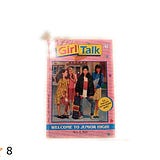
This is the first in the popular Girl Talk series. It’s about a thirteen year old Sabrina Wells, who starts the seventh grade juggling bullies, crushes, and fitting in. Standard teen stuff, but it’s good comfort food. It’s nice to be able to escape to the 90s for a few hours, when your biggest worry was whether or not you’d have a date to the dance. The characters are a blast, particularly the punk girl Randy from New York. I also liked the chapter which consisted entirely of telephone conversations.
The Party by Carrie Randall
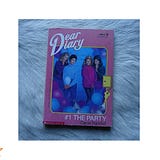
This is the first entry of the short-lived Dear Diary series. It has a very similar premise to L.E. Blair’s Welcome To Junior High, to the point where the popular blonde bully in the two books is near interchangeable. The plot is told to us through diary entries, with Lizzie trying to balance appealing to the popular crowd with staying loyal to her friends. The standout character is Lizzie’s Dad, who is constantly imposing his new inventions on the family.
Dorothy and the Wizard in Oz by L. Frank Baum

This is the fourth novel in the Oz series, which opens with a funny introduction from Baum about how he felt compelled by demands from fans to write another book. The Oz books truly are the American Alice in Wonderland, in which the happenings and events are fantastical beyond any imagining. Dorothy lands in Oz by falling into the Earth after a quake. There, she is reunited with the wizard, who carries around nine piglets with him which he uses in magic tricks. Along the way they deal with wooden gargoyles that have detachable wings and Dorothy’s cat is put on trial for the curious disappearance for one of the wizard’s piglets (which she may or may not have eaten).
The Sympathizer by Viet Thanh Nguyen
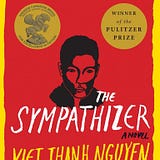
This book hooked me from the first sentence. The Sympathizer easily ranks alongside Carrie, Frankenstein, and The Hobbit, as one of the best debut novels ever written. It’s a complex narrative that is told through a meandering stream of consciousness, but at its simplest level, it’s about a Vietnamese communist spy who escapes the Fall of Saigon to come to America and subvert an Apocalypse Now style film. But there’s more to it than that. It’s about a man of multiple identities, who has to grapple with the contradictions of being Vietnamese, Asian-American, a communist, and a war spy. The book is also a biting critique of popular American films of the Vietnam War, which often put the Vietnamese in the background as either monsters, victims, or prostitutes (I would put a minor exception for Good Morning, Vietnam and We Were Soldiers). Of course, Nguyen spares no one from the criticism, not even the Viet Cong. The novel takes a hard, but honest look at the hypocrisy and cruelty they waged against their own people. It may be for this reason that the book is restricted in Vietnam itself. While the novel’s tone constantly shifts from hilarious to horrifying, it never feels jarring. The Sympathizer belongs in the canon of great American literature.
Justin and the Best Biscuits in the World by Mildred Pitts Walter

My fourth grade teacher first read this book to us in school, and I was never able to get the cover of a smiling kid cowboy holding biscuits out of my mind. It’s a heart-warming story about Justin, a kid who doesn’t know how to cook or clean his room. He derides cooking and cleaning as “women’s work”, though he privately resents his inability to do either. That all changes when Justin goes to his Grandpa’s ranch for the weekend, and learns that “women’s work” can also be done by men. It’s a good story for young boys to read and will also get them hungry for biscuits.
Forest of Wool and Steel by Natsu Miyashita (Translated by Phillip Gabriel)

Tomura dreams of becoming a piano tuner. He can’t play the piano, but the music and shape of the instrument make him think of a vast forest. He comes into an apprenticeship to learn the craft, learns a number of delightful metaphors from his teachers, and comes to work for a pair of twin pianists. The book is fun and quick, for what it is, but I found the prose to be a little too sparse. It has a good taste, but it doesn’t quite marinate, if that makes any sense. It did make me appreciate the art of piano tuning, and how much of it can depend on the wood of the piano, the ear of the tuner, or the style of the pianist. There was one good line that stands with me. When one of the twins mentions that she wants to be pianist, she is told that it isn’t very profitable. She simply replies that, “Playing the piano is not how I’ll make a living. It’s how I’ll make a life.”
The Scarlet Pimpernel by Baroness Orczy
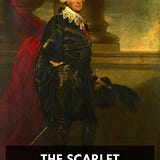
The Scarlet Pimpernel was literature’s first modern superhero. This caped crusader rescued innocents from the guillotine amidst the heights of France’s Reign of Terror. He left a signature calling card, had a secret identity, and was even the head of a team: the League of the Scarlet Pimpernel. My introduction to the Pimpernel was through Daffy Duck as the Scarlet Pumpernickel. Upon reading the book, what surprised me was that the whole story is seen from the perspective of the Pimpernel’s wife, who has no idea that her foppish husband is a heroic vigilante.
Ceasefire by Cathy Young
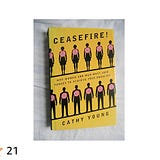
This book feels newly relevant amidst the nadir of relations between men and women today, at least as far as heterosexuals are concerned. Every day, it seems, a new horror story of misogyny is revealed, further deepening the reasonable fear and anger that women have with men. On the other hand, men seem to be falling deeper into loneliness and depression, with many of them struggling to find romantic relationships with women, which produces a resentment all of its own. Ceasefire was written in 1999, but it could just as easily have been published today. In the book, feminist Cathy Young recognizes the continuing need for women’s rights, but she also points out that men face issues just as pressing. I can’t say that I necessarily agreed with everything in it, but her call for a more nuanced gender discussion that refuses stereotyping either the male or female experience is worth another look.
Gifts of Deceit by Robert Boettcher
Gifts of Deceit is a readable and thrilling account of the “Koreagate” scandal of 1976. The focus is on three figures: Park Chung Hee, Sun Myung Moon, and Tongsun Park. After Park Chung Hee seized power in South Korea through a military coup, he declared martial law and passed the Yushin Constitution which gave him dictatorial powers. This upset many American representatives who were wary of continuing to give military support to an authoritarian nation. Wary of losing U.S. aid, Park had the Korean CIA covertly influence politicians to support Korea through the bribery of lobbyist Tongsun Park and the religious proselytizing of messiah claimant Sun Myung Moon. As an Ex-Moonie myself, I was often told that the government investigations into Moon were driven by religious persecution. This book puts that narrative to bed, revealing how Moon, along with Park, abused religion and money to prop up a brutal dictatorship. The book will feel relevant to many Americans today in light of the intense Russian and Israeli propaganda efforts to garner support for their inhuman atrocities.
The Phantom of the Opera by Gaston Leroux (Translated by Alexander Teixeira de Mattos)

Before the Andrew Lloyd Weber musical or the 1925 silent film with Lon Chaney, there was the novel by French author Gaston Leroux. The book is told mostly from the perspective of Raoul, who is in love with his childhood friend Christine, a rising star at the opera house. Christine receives secret music lessons from the mysterious Angel of Music, whom the jealous Raoul suspects is the skull-masked masquerade dancer Erik. When Erik doesn’t get what we wants from the opera house, he spreads terror, such as when drops the great chandelier over an unsuspecting audience. When Christine goes missing, Raoul goes on the hunt for him to save the woman he loves. The Phantom of the Opera is more romance than horror, though the finale in the torture chamber is still quite the page-turner. Erik, as to be expected, remains the standout character of the story, who is equal parts creepy and tragic.
The Last Fighting Spirit by Antonio Inoki (Japanese)
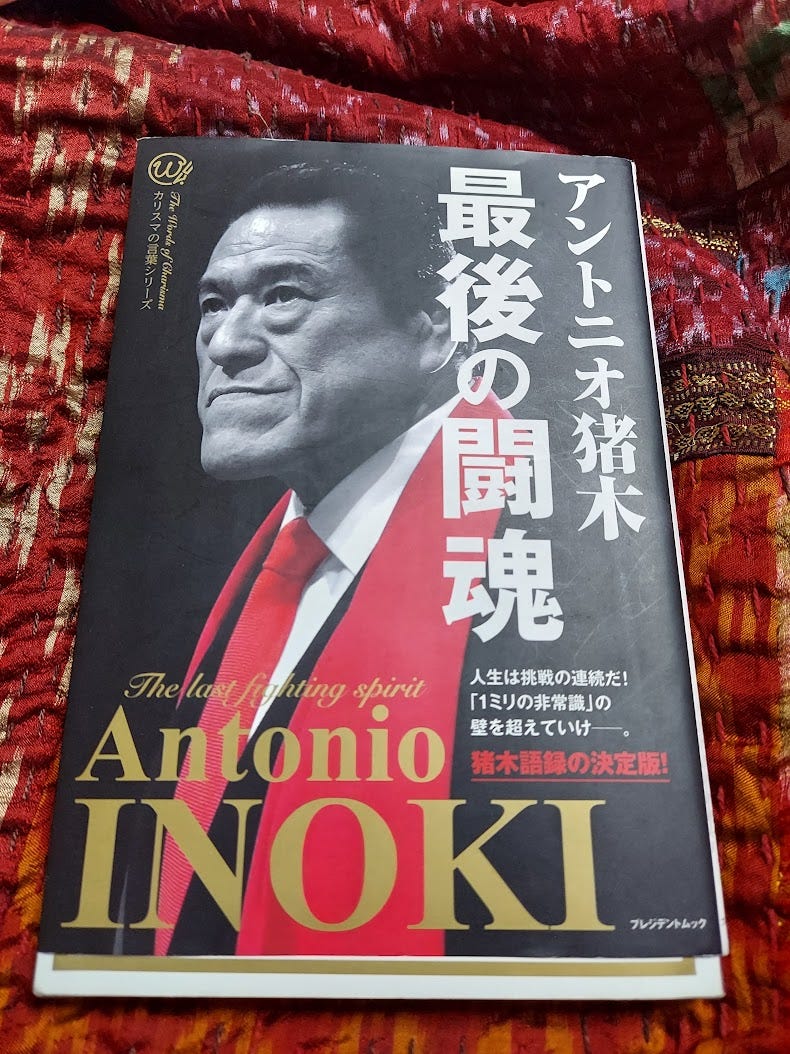
The late Antonio Inoki was one of Japan’s great pro-wrestlers, who fought with the likes of Muhammad Ali and Hulk Hogan. He also worked as a renegade diplomat to Iraq and North Korea. Inoki lived quite a remarkable life and his Last Fighting Spirit, released one year before his death in 2022, carries much of the wisdom he gained from years of fighting and failure. The book also reminded me a lot of Yogi Berra’s memoir, When You Come To A Fork In The Road Take It! I often read one section a day every morning to inspire me. If you can read Japanese, I hope that Inoki’s life inspires you, too.
Korean Fairy Tales by William Elliot Griffis

This is a collection of Korean fairy tales by William Elliot Griffis, an American physicist who taught in Japan and introduced a lot of Japanese and Korean stories to the West. In this collection of Korean tales, my favorites were “The Rabbit’s Eyes”, “Long-ka, the Dancing Girl”, “East Light and the Bridge of Fishes”, and “The Woodman and the Mountain Fairies.”
Living In Japan by Joy Norton and Tazuko Shibusawa
Whether you want to travel Japan for a vacation or stay there for an extended period, Living In Japan is a useful guide. Granted, it was written in 2001, so it might feel a little outdated, but it remains relevant to describing the cycles that foreigners go through living in Japan in various stages.
Black Skin by Djia Ayodele
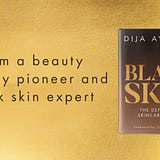
As a black man who has struggled with razor bumps, acne, hyperpigmentation, and even mild eczema, I wish I had received this book in high school. Granted, I have a far better skin care routine nowadays, but it cost a lot in terms of money and mistakes. We as a society should do a better job to educate people about skin care, especially black people who often have special needs. Djia Ayodele’s Black Skin is a must-read for black folks. It’s written in a very straight-forward, unpretentious language, and is honest about the fact that we may never have perfect skin, but we can always do better.
Shin New York Neighbors by Yutsuko Chusonji (Japanese)
Yutsuko Chusonji was to manga what Anthony Bourdain was to television. She had a passion for other cultures (especially when it came to food) and loved to travel the world. This comic is a sequel to the original New York Neighbors which was written in the 90s. It follows her experience in New York City and elsewhere across the country in the post-9/11 era. Chusonji observes America with a good sense of humor, even sneaking in a few 9/11 jokes. She also meets several celebrities like Jay-Z, Ted Turner, and Jimmy Carter. Though the book is really all about food and there’s even a helpful guide to NYC’s best restaurants.
Breasts and Eggs by Meiko Kawakami (Translated by Sam Bett and David Boyd)

Meiko Kawakami’s Heaven left me very horrified with its visceral look at bullying. Breasts and Eggs is much lighter fare, though it still deals with some serious topics. The story is about two sisters, Natsume and Makiko. Natsume is a struggling writer, who is considering having a child. Makiko is a single mom who is thinking about breast enhancement surgery. The book examines what it means to be a woman in the modern world through these two, though she also uses the diary entries of the young Midoriko to look at girlhood. Natsume’s dislike of sex with men and her concerns other whether or not have a child feel very relevant to the gender divides of today. Breasts and Eggs is a powerful, necessary read.
If I may comment on the translation, I find it strange that mugicha is untranslated. Mugicha is barley tea, but instead of using barley tea, the translators leave it as mugicha, which will confuse many English-speaking readers. Why was this done? To make something as bland as barley tea sound more exotic?
Prison Writings by Kim Dae Jung (Translated by Choi Sung-il and David R. McCann)
The parallels aren’t exact, but Kim Dae Jung could reasonably be called the Nelson Mandela of South Korea. He was a human rights activist who fought to make his country truly democratic, was unjustly thrown into prison, was later elected to lead the nation, and won the Nobel Peace Prize. Of course, a major difference between these two leaders was that Mandela believed in violence narrowly targeted at the apartheid infrastructure. While Kim believed in non-violence no matter the circumstance (this makes him philosophically identical to anti-apartheid activist Albert Luthuli). This posture was due to Kim’s powerful Christian faith. This is not to say that Mandela’s faith was insincere, but that both men had different ways of interpreting the scriptures.
In fact, the most surprising thing about the book, which is a collection of letters Kim sent to his family from prison, was how much he talks about his faith, and how little about politics. Given that he was imprisoned for opposing the Park Chung Hee and Chun Doo Hwan regimes, this is a remarkable omission, but for Kim, having a heart of faith is what powers his resistance to the South Korean dictatorship. Kim’s defenses of Christianity are so erudite, persuasive, and plain-spoken, that he might also be called the C.S. Lewis of the nation.
The Hero With A Thousand Faces by Joseph Campbell
This is the book that famously influenced the plot structure of George Lucas’s Star Wars and has inspired many other storytellers since. Joseph Campbell’s “Hero’s Journey” is now universally well-known and much imitated. The first work of Campbell’s I read was his conversation with PBS host Bill Moyers, The Power of Myth. I honestly preferred that text to this one. This isn’t to say that Thousand Faces is a bad book, but I found it less accessible to the layman than The Power of Myth. Thousand Faces is still a good, if not dense overview of the hero’s journey, and the familiar tropes that weave themselves into so much of mythology and religion.
Double Love by Francine Pascal
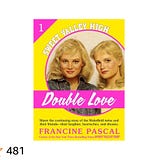
This is the first entry in the Sweet Valley High series. It’s about two California twins who compete for love and popularity in high school. Like many books of the genre, it’s delightfully funny and drama is overwrought, but it also touches upon the dangers of chasing “bad boys.”
West African Folk Tales by W.H. Barker and Cecilia Sinclair

From this delightful collection of stories, one can read of West Africa’s most famous trickster, Anansi the Spider. One thing I learned about Anansi is that he spends about just as much time being tricked as he does tricking others.
Genesis (Douay-Rheims Translation)

This is my first time reading the Catholic version of the Bible. I haven’t read the Bible all the way through since college, and even then, it was the King James Version. I know that the Catholic version has books that the Protestant version does not. Reading Genesis again as an agnostic, it feels glaringly apparent to me that the writers did not intend for a lot of it to be taken literally. Whether or not Adam and Eve were tempted by a talking snake or if Noah survived a global flood in an ark with every animal isn’t the point. The point of Genesis, like any good fable, is teach us about the foibles of human nature. Genesis has inspired so much great art. Without it, we wouldn’t have Milton’s Paradise Lost or Michelangelo Sistine Chapel.
The Twelve Kingdoms: Shadow of the Moon, Sea of Shadows by Fuyumi Ono (Translated by Eugene Woodbury)

The Twelve Kingdoms stands alongside Kaoru Kurimoto’s Guin Saga, Isuna Hasekura’s Spice and Wolf, and Hideyuki Kikuchi’s Vampire Hunter D as one of Japan’s great contributions to fantasy literature. My interest in the series stemmed from its anime adaptation, which was good, but lacking. As expected, the novel is more fleshed out. The first volume, Shadow of the Moon, Sea of Shadows, may be one of the best fantasy novels I’ve ever read.
The story is about a shy Japanese high schooler named Yoko Nakajima, who lacks any confidence and goes along with whatever others tell her. One day, she is whisked away by the blond-haired man named Keiki, who takes her to a wuxia-inspired fantasy world of twelve kingdoms. Yoko loses contact with Keiki in a storm and is stranded with only a magic sword that can defeat anything in its way whenever she uses it. Yoko is a refugee from Earth so she is viewed with suspicion and is often betrayed. This hardens Yoko, who spurns the friendship of others and tries to rely only on herself to survive. Yoko only starts to change once she meets the kindly talking rat, Rakshun, and from there on, starts to embrace her destiny.
I read several fantasy novels in 2025, including N.K. Jemisin’s The Fifth Season, Brandon Sanderson’s Mistborn, and Robert Jordan’s Eye of the World. I was mixed on all three. Mistborn’s prose was too underwhelming, The Fifth Season’s was too ephemeral, and Eye of the World’s was too tedious. By comparison, Shadow of the Moon was a breath of fresh air. The prose was neither too thin nor too overwhelming, but rich enough to bring you into the story without confusing you. This is as much a credit to the translator as it is to the author. On that topic, let’s give a moment of thanks to Eugene Woodbury, the fan translator who passed away in 2025. His efforts ensured that the Twelve Kingdoms would continue to be read outside of Japan long after Vertical’s translations went out of print. Let’s honor him by also buying the new official translation of Shadow of the Moon by Seven Seas.
What makes Shadow of the Moon so great is its psychological look into Yoko. Like Mistborn, the story is about learning to trust others even if they might betray you. Yoko’s growth from feckless coward to scowling loner to righteous warrior is the emotional core of the novel which makes for a more mature book than one might otherwise expect.
Sapiens: A Brief History of Humankind by Yuval Noah Harari
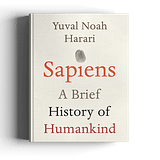
Historian and public intellectual, Yuval Noah Harari, has written a long, but addictive account of human history, from the earliest Homo species to the present day. Once you pick up Sapiens, you can’t put it down. Sapiens is a far cry from Steven Pinker’s The Better Angels of Our Nature, which extols the humanist myth of “human progress.” From Harari’s perspective, this is no less a myth than Christianity, a story we tell ourselves to prove humanity’s uniqueness. Myths, of course, are important for humans to survive and get along with one another, but they are still myths we invented. For Harari, humans aren’t that much different from animals, as we are both driven by many of the same primal forces. Nor are humans of the present so much different from humans of the past. Harari argues that if we had lived in their times, we likely would’ve made similar decisions. The end of the book is what unsettled me the most, with its trans-humanist visions which border on eugenicist. To be fair, Harari is not endorsing these ideas, but he raises them as a possibility. The idea that the classes of the future will be split into those who can live forever and those who cannot is frightening, but its likelihood is still an open question.
The Road To Oz by L. Frank Baum
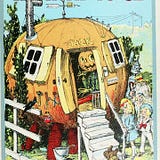
The Road To Oz is the fifth Oz book and isn’t much of an adventure compared to the previous four. It’s more about Dorothy taking along some new friends, the Shaggy Man, Button Bright, and Princess Polychrome on a journey to celebrate Princess Ozma’s birthday party. The funniest surprise was the appearance of Santa Claus himself at the birthday, perhaps his first major cameo in a fantasy book. The second, of course, being The Chronicles of Narnia.
The Radicalism of the American Revolution by Gordon S. Wood

A new appreciation and understanding of the American Revolution is needed in light of the grave threats to its legacy from the second Trump administration. Historian Gordon S. Wood challenges the common belief that the American Revolution was too conservative to be as radical as the French or Russian Revolutions. Wood puts us squarely into the hierarchies of the period, which relied on monarchy, patronage, and patriarchy, the very ideas that the revolution began to undermine. The revolution, for example, popularized the idea that a person’s standing in society should rely less on their nobility and more their education. There was this belief that, if given the liberty and the resources, people will naturally become more rational and less sectarian.
The most sobering and shocking part of the book, however, is the final chapter, where Wood suggests that most of the founding fathers were left quite disappointed and disturbed by the very revolution they founded. The people did not become less fundamentalist and partisan, but the very opposite. The people more religious and polarized. One wonders what they would make of America today.
The Emerald City of Oz by L. Frank Baum

This was once intended as the last Oz book so its story is as epic as a finale would suggest. Baum’s great talent is his ability to juggle so many different characters and have them all shine. Dorothy is initially in Oz again to find a new home for Aunt Em and Uncle Henry, who can no long afford their farm. Along the way she learns of a plot by the Nome King to conquer Oz. The book is also relentlessly funny with its wordplay.
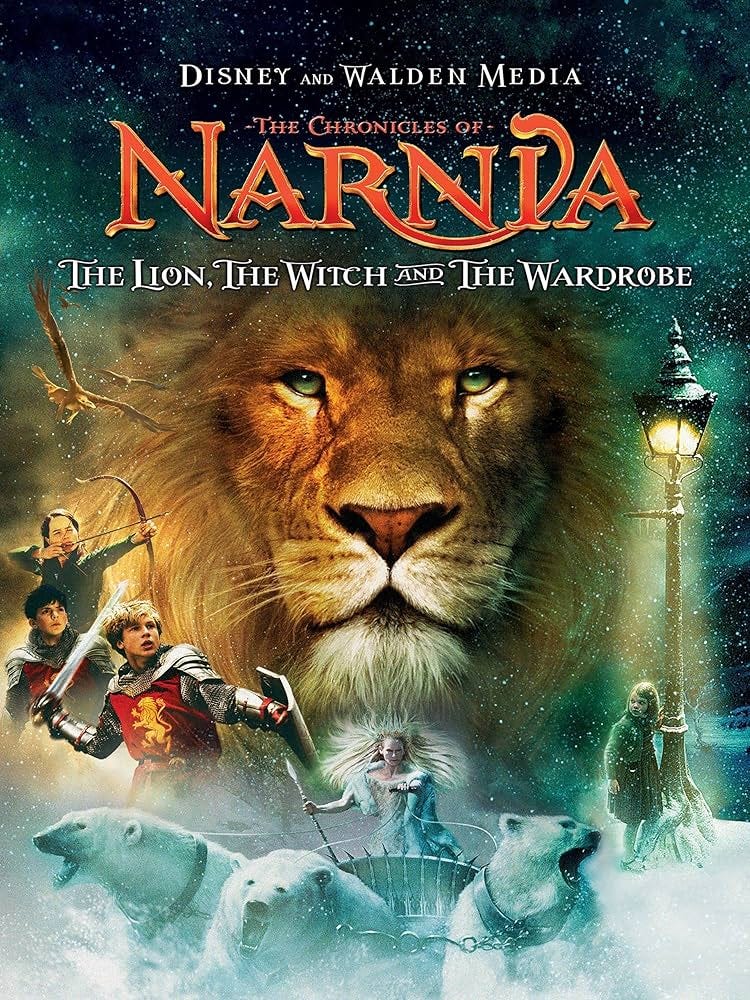
The Lion, The Witch, and the Wardrobe by C.S. Lewis
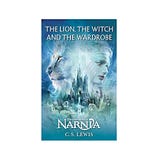
I haven’t read a Narnia book since the fifth grade. I felt just like a kid again, instantly absorbed into the magical world of C.S. Lewis. Now, while it does lack the character growth and psychological depth of other children’s books like The Hobbit and The Borrowers, it makes for a perfect fairy tale. The Christian allegories are obvious, but they don’t ruin the narrative for me. I also forgot how funny the narration could be. The Narnia books are hopelessly addictive given that any of them can be finished in a day.
Prince Caspian: The Return to Narnia by C.S. Lewis
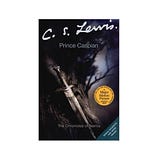
This was always my favorite of the Narnia books as a kid because it was a war novel. Though I recall the fighting as far more epic as a child. While there are echoes of the first book, it takes on a more somber tone. All of the friends that the Pevensies made in their last trip to Narnia have passed away and Aslan is nowhere to be seen. The story is about the importance of keeping faith in oppressive and decadent times, which is very relevant to many of us today.
A Magical Girl Retires by Park Seolyeon (Translated by Anton Hur)
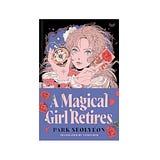
I never thought that I would ever see the magical girl genre take novel form, let alone one as heartfelt, satirical, and tense as this one. Unlike most magical girl stories, A Magical Girl Retires is not set in Japan, but in Korea. It opens with a working-class girl who is drowning in debt and about to take her own life. She is saved by a magical girl who believes that she has special powers which may save the world. Though the book is short enough to be finished in an hour or two, its relevance to the problems of our daily lives will provide many readers with emotional catharsis.
The Voyage of the Dawn Treader by C.S. Lewis

The third Narnia book retires the battles of the first two and opts for a more sea-worthy adventure. This time, we get the introduction of Eustace Scrubb, who starts off as an annoying brat, but like Edmund before him, comes to learn his lesson through Narnia. As always, the valiant Repicheep is the best mouse there is.
Leaves of Grass by Walt Whitman
I had read a slimmer version of this poetry collection in college. This time, I read the unabridged version with a whopping 400 poems. I actually prefer this version, as it gives you a greater sense of how talented Walt Whitman was. His poetry made him seem greater than a mere man, but rather a man who contained the world entire.
The Luzumiyat by Abu Al-Ala Al-Ma’arri (Translated by Ameen Rihani)
The Luzumiyat is a lovely work of poetry by Abu Al-Ala Al-Ma’arri. Blind, a skeptic, and a vegan, Al-Ma’arri was definitely one who stood out during the Islamic Golden Age. His poetry is as rich as it is painful, to sample one section: “But I, the thrice imprisoned, try to troll/Strains of the song of night, which fill with dole/My blindness, my confinement, and my flesh — /The sordid habitation of my soul.”
Arguably by Christopher Hitchens
I had always regarded Christopher Hitchens as one of my favorite writers, but upon re-reading his work, that passion has begun to dampen. While Hitchens remains unmatched as an orator and debater, his writing can come off as a little too long-winded and pretentious. Still, this collection has many quality and classic essays of Hitch which reveal his enviable breadth of knowledge, such as “The Boy Who Lived”, “The Vietnam Syndrome”, “Worse Than Nineteen-Eighty Four”, “Stand Up For Denmark!”, “On Animal Farm” and “The Gods of Our Fathers: The United States of Enlightenment.”
Amora by Natalia Borges Polesso (Translated by Julia Sanchez)
In this collection of short stories, Natalia Borges Polesso captures all the varieties of lesbian love at different ages and stages. Some loves are lifelong while others are suddenly cut short. My favorite stories in the collection were “Grandma, Are You A Lesbian?”, “First Times”, “Bite Your Tongue”, and “Memory”.
The Silver Chair by C.S. Lewis
This was the last of the traditional Narnia books. The next three in line are a spin-off, a prequel, and the finale. I remember liking The Silver Chair well enough as a kid, but my opinion of it soured a little as an adult. The book is very gloomy, Eustace and Jill are constantly arguing, and there isn’t that much in the way of adventure or battle. What saves the book are the frightening Lady of the Green Kirtle and the dark-humored Puddlegum, who gets one of the best monologues in fantasy literature.
Poems by Aleksandr Pushkin (Translated by Ivan Panin)
Russia’s great poet has a huge reputation and I did not come away disappointed. His poetry covers love, nature, and his homeland. I liked this passage from “First Love”: “Not at once our youth is faded,/Not at once our joys forsake us.”
The Politics and the English Language and Other Essays by George Orwell

This was a short book, but a worthwhile one. Outside of his novels Nineteen Eighty Four and Animal Farm, George Orwell was also an accomplished essayist. This is a short collection, but a common theme is Orwell’s preference for political honesty over political propaganda. My favorite essays are the “Politics and the English Language”, “Politics vs. Literature”, and “Why I Write.”
The Kamogawa Food Detectives by Hisashi Kashiwai (Translated by Jesse Kirkwood)

This savory book (pun intended) reminded me Before The Coffee Gets Cold by Toshikazu Kawaguchi. That novel used coffee as a device to unlock memories and regrets. In a similar way, The Kamogawa Food Detectives uses food as a device to unlock memories and regrets. The protagonists of the novel are a father and daughter, Koshi and Nagare, who run the Kamogawa Diner in Kyoto. They work as food detectives who uncover the recipes of meals that people can only remember, but can no longer eat. This is often because the person who made it has died, and more than the taste of the food, the client wishes to rekindle the memories of that person. The book is light comfort reading, which is to be enjoyed by both foodies and sentimentalists. My only issue with the book is that we do not go through the journey of solving the mystery. Instead, it is explained to us at the next meeting with the client. While this does still provide the needed emotional release, I still would’ve appreciated to see the journey.
Mary Poppins by P.L. Travers
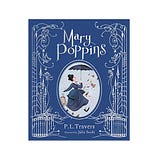
I think most of us have grown up watching the Disney version of Mary Poppins with Julie Andrews and Dick Van Dyke. A version which was infamously despised by the author P.L. Travers. So I decided to read the book for myself and figure out why. Granted, I haven’t seen Mary Poppins since I was a kid, but I recall the nanny being magical and kind. The nanny in the book is certainly magical, but far from kind. She’s very strict and cold with the children. Mary Poppins is a scary and unlikable character, but her adventures with the children are what delight me the most. I also have a sneaking suspicion that Poppins may be a god of some sort. On her birthday, for example, all the animals in the zoo gather around her and sing her praises. It’s hard to get any more on the nose than a lion literally lying down with the lamb.
Montezuma’s Daughter by H. Rider Haggard
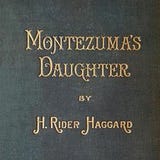
Like H. Rider Haggard’s King Solomon’s Mines, Montezuma’s Daughter is about a white man who discovers a hidden and exotic foreign culture. This time, an Englishman chases a Spanish Conquistador all the way to the Aztec Empire in order to avenge his family. The Englishman is later taken in by the Aztecs, learns their ways, falls in love with their princess, and leads them into battle against their Spanish colonizers. We’ve all seen this “white man goes native” trope before in Dances With Wolves and Avatar, but a major difference is that the Aztecs of Montezuma’s Daughter are not idealized “noble savages.” Their practice of human sacrifice is shown in all its gruesomeness, but while the narrator condemns this evil practice, he still implores the reader to sympathize with the Aztecs and deplore their colonization. This is a welcome degree of nuance for a book of this age.
The Patchwork Girl of Oz by L. Frank Baum

This is the first Oz book to introduce Scraps the Patchwork Girl, who would later become the inspiration for Sally in The Nightmare Before Christmas. Scraps may be my favorite character from Oz. She has an anarchic spirit who doesn’t care for the judgements of others. I also liked the glass cat Bungle, who is so very proud of her pink brains. You can even watch them work.
Anarchism and Other Essays by Emma Goldman
To preface, I am a social democrat, not an anarchist, but nevertheless, I found Emma Goldman’s essays to be passionate arguments for humanity and justice. That she so boldly argued for women’s rights, sexual freedom, and labor rights in the early 20th century speaks to her courage. Goldman was particularly critical of the institution of marriage as tool to keep women in subservience. My favorite essays in the collection were “Traffic In Women”, “The Hypocrisy of Puritanism”, and “Patriotism: A Menace To Liberty.”
All-Star Superman by Grant Morrison, Frank Quitely, and Jamie Grant
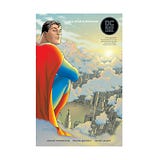
I heard that this comic was a major influence of the recent James Gunn film, so I had to give it a look. When it comes to the Superman comics, I’m mostly familiar with the early stuff from the 1930s, so I can’t say that I caught all the references in this one. It did remind me of Alan Moore’s Whatever Happened To The Man of Tomorrow, as a kind of farewell to the Superman character. In All-Star Superman, the title hero learns that he is dying of an incurable condition and so sets out to do seven good deeds. I preferred this comic over Moore’s Man of Tomorrow, because the character dynamics were much stronger, especially between Superman, Lex, and Lois.
Exodus (Douay-Rheims Translation)
It is the book of Exodus which first graced the world with the story of Moses. It’s a great tale and it’s easy to understand why it’s inspired so many. Though there are troubling aspects as well, such as the deliberate hardening of the Pharaoh’s heart and killing of the Egyptian firstborn.
It Can’t Happen Here by Sinclair Lewis
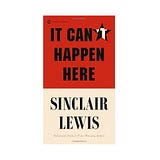
A book that feels very prescient to Trump’s America, It Can’t Happen Here is about how an authoritarian populist, Berzelius “Buzz” Windrip, rises to power and institutes a fascist regime in the United States. That the book could have been written yesterday shows how little things have changed in my country. Windrip rises to power by using songs and slogans, by appealing to old bigotries against Jews and blacks, and by promising to get things done with efficiency. He even sets up a paramilitary known as the “Minute Men” (a clear prelude to ICE and the Proud Boys). The first two thirds of the novel are very funny, skewering not only the fascist right, but also the Stalinist left. The tone of the story reminded me quite a bit of Charlie Chaplin’s The Great Dictator, that is, until the last third of the novel, where it takes a serious turn. The protagonist Doremus Jessup, who feels like he’s going insane seeing so many turn towards fascism, eventually ends up in an American concentration camp for his criticism of President Windrip. The descriptions of his torture are about as grueling as you might imagine. It Can’t Happen Here does end with a hopeful message, however. That fascism is self-defeating, as people cannot suffer the suppression of their freedoms for so long.
Carmilla by F. Sheridan Le Fanu
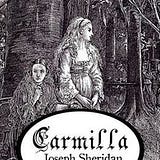
Carmilla was the first lesbian vampire novel and has a sexual frankness that one would not expect from the Victorian Era. I much preferred Carmilla over Dracula. Both are great books, but Carmilla has some advantages to it. The first is that the attempted seduction by the title vampire feels more intimate and darkly romantic. There’s a palpable sexual desire from Carmilla for the protagonist, Laura. The second is that this novel is much scarier. The nightmares that Laura have of Carmilla trying to enter her bedroom still give me chills. The novel isn’t epistolary either, so the prose is also a lot more straightforward, which makes for a smoother read.
Parasite Eve by Hideaki Sena (Translated by Tyran Grillo)

This sci-fi novel famously inspired a video game by Square Enix and a horror film by Masayuki Ochiai. Parasite Eve is a body horror about a scientist who wants to keep his dead wife alive through experimenting on her liver cells. If you’ve read or watched Frankenstein, then you already know that this will lead to some unintended consequences. Though unlike Frankenstein, which skirted explaining how Victor brought the monster to life, Hideaki Sena goes into great detail to describe the cellular biology behind how an evolved Mitochondrial Eve might take form. A lot of this exposition goes on for too long, and frankly, could’ve been edited, but it doesn’t make the novel any less a page turner. Mitochondrial Eve’s explosive killings and grotesque transformations are the stuff of nightmares, though some of best horror comes from the subplot with a girl named Mariko who is uncomfortable with a kidney she received from her father. Her struggle hints at the paranoia which many of us can have about our own bodies; the hatred which we can direct at our own organs.
Tik-Tok of Oz by L. Frank Baum
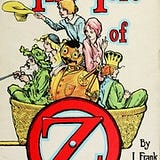
I feel that this book is erroneously titled, as the character of Tik-Tok barely figures into it. It’s about the Shaggy Man’s search for his missing brother, who was once handsome but is now hiding due a disfigurement. The best new character in this story is the lazy dragon Quox, whose peculiar back has perfectly shaped seats for his companions to ride. There came a point while reading this book that I realized that Oz no longer needs Dorothy to be entertaining. Baum’s world has developed its own charms.
Ring Shout by P. Djèlí Clark

This is a historical fantasy about a black woman who fights demons and the KKK with a magic sword in the 1920’s. I had a fun time with it, especially the historical references to Emma Goldman, Birth of a Nation, and Stone Mountain. The relationship between magic and cinema touched upon here reminds me of that in Silvia Moreno-Garcia’s Silver Nitrate. How watching a film can be akin to falling under a hypnotic spell.
Climate Change: A Very Short Introduction by Mark Maslin

Climate change is the most significant challenge facing human civilization, and yet our institutions are slow to meet it. Mark Maslin’s book is a frank and readable overview of the facts. Maslin irrefutably lays out the evidence of climate change, such as the ice cores which can serve as a historical record of the shifting carbon amounts in our atmosphere. Maslin doesn’t shy away from the dangers of climate change (such as the fact that Osaka and London could be underwater), but he also doesn’t leave us without hope: “We have the technology, the resources, and the money to deal with climate change. What we currently lack are the political will and policies to enable all the positive win-win solutions needed to make a better, safer, healthier, and hopefully happier world.”
Broadcast Talks by C.S. Lewis

I always find C.S. Lewis delightful to read, even when I disagree with his conclusions. In Broadcast Talks, Lewis speaks about the laws of the universe and how they inevitably lead, not only to the existence of God, but to the truth of Christianity. Lewis makes some astute observations of human nature, how even people who act without morals will still appeal to moral law. These talks may also be the first articulation of the famous Lewis Trilemma, that you must either accept Jesus as a madman, a deceiver, or as the messiah. I don’t quite agree with this because it assumes that Jesus actually said all of the things which are attributed to him in the Gospels. Who’s to say that he even called himself messiah at all? But even if he did, I think that it’s perfectly possible to appreciate the teachings of certain figures, even if, to paraphrase Bertrand Russell, you wouldn’t go with them all the way. One can certainly believe that Muhammad or the Buddha aren’t divine, while still appreciating what their teachings. In any case, many Western morals are inextricably linked to Christianity, so to not pay the founder a debt of gratitude, even a small one, seems an error.
The Scarecrow of Oz by L. Frank Baum
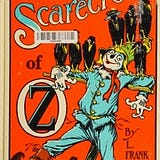
Like Tik-Tok of Oz, this book is also erroneously titled because the Scarecrow barely figures into it until the near end. We start to see Baum drifting away from Dorothy and even the Land of Oz itself, to explore the other regions of his imagination. The protagonists are even from another Baum book, Sky Island. Still, this adventure is no less fun that the previous ones, especially with the Scarecrow’s final confrontation with the witch.
The Empty House and Other Ghost Stories by Algernon Blackwood

The was my first brush with the horror stories of Algnernon Blackwood. My overall impression of him was that his stories feel like nightmares you aren’t sure were real. Dark illusions that may or maynot resemble something that happened, but Blackwood isn’t too keen on confirming it either way. “The Empty House” and “The Haunted Island” are great, but the story that always will stay with me is “The Wood of the Dead.” In that tale, there is a town with a haunted pine grove, where any who enter it mysteriously end up dead. The village ghost who calls people in to the wood, and they find a peaceful eternal slumber afterwards. There’s a haunting beauty to it all.
The Running Man by Stephen King
Written by Stephen King while under the pseudonym Richard Bachman, The Running Man is a tense thriller about a dystopian future where a contestant must survive being chased across the country by hunters hired to kill him. The book is among the many predecessors to the Hunger Games, but unlike The Most Dangerous Game or Battle Royale, this story introduces the element of reality television.
Xenozoic by Mark Schultz
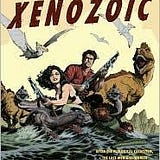
I was first introduced to the Xenozoic Tales comics through the cartoon Cadillacs and Dinosaurs. These stories are set in a post-apocalyptic world, where dinosaurs have reemerged from the deep chasms of the Earth. Now humans must live alongside dinosaurs while struggling for survival. The heroes of this story are Jack Tenrec, a mechanic with a spiritual connection to nature, and Hannah Dundee, an ambassador who wants to retrieve the ancient knowledge. Most of the stories follow Jack and Hannah trying to preserve the fragile balance between humans and nature in their fights against the poachers. Of course, there’s also plenty of action, which often ends with one of Jack’s Cadillac’s getting totaled. The art is a powerhouse. I started reading the comics because I wanted to know what happened after the cartoon had ended. Sadly, the comic remains unfinished.
The Rinkitink in Oz by L. Frank Baum

This is an Oz book that doesn’t feel like an Oz book. In fact, it feels a lot more like a fantasy novel in the vein of Prince Caspian. The protagonist, Prince Inga of Pingaree, is on a journey to reclaim his kingdom from Ruggedo the Nome King. He is joined by the fat and jolly King Rinkitink, who makes everyone suffer through his terrible songs, and the goat Bilbil, who has nothing kind to say to anyone. Like the other Oz books, this one is quite funny, especially with the white pearl that unexpectedly gives a servant girl superhuman strength.
Kindred Heavens (Vol 1–3) by Scott Malin and Bryce Beal
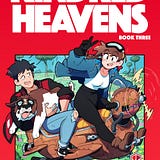
Kindred Heavens is a fun time. A series of graphic novels set in an alternate 1920s Europe, where athletes compete in a new sport called windracing. Our hero, Isabelle Voit, hopes to be a champion windracer like her late mother and seeks to prove herself to her demanding father, who was the inventor of windracing. (He also looks a lot like Carl from Pixar’s Up). Bryce Beal and Scott Malin’s art style owes a clear debt to Hayao Miyazaki, but it is also something new all its own. Kindred Heavens is an easy crowd-pleaser that readers of all ages will enjoy.
Short Fiction by R.A. Lafferty

R.A. Lafferty has to be one of the most bizarre science-fiction authors I’ve ever read. His stories always seem to start in one direction and end somewhere you never knew existed. For example, there’s the story “Aloy”, about a superintelligent blob who regards humans as inferior lifeforms, but joins up with a circus and gets married. My favorites in the collection were “The Six Fingers of Time”, “The Polite People of Pudibundia”, and “In The Garden.”
The Martian Chronicles by Ray Bradbury
The Martian Chronicles may be Ray Bradbury’s masterwork. The book works both as a collection of short stories and as a novel. The main theme that connects the stories is the human colonization of Mars. Of course, once there, we end up repeating a lot of the same mistakes we made here on Earth. My high school history teacher introduced me to the short story “Usher II”, where the protagonist has created a mansion where he can recreate the horrors from many of Edgar Allan Poe’s short stories.
Islam Explained by Ahmad Rashid Salim
If you want a quick, but detailed introduction to Islam that can be read in a day, Islam Explained by Ahmad Rashid Salim will fulfill that urge. I’m already familiar with the broad strokes of Islam, so this book was a good refresher, though it left me a little wanting. What I appreciated most in the book was Salim’s delving into the nuances of the religion, such as the Sunni-Shia divide and how Islam reveres and re-interprets many events in the Hebrew Bible and Christian Old Testament. My only criticism is that the book seems to shy away from some of the more controversial aspects of Islam that non-believers might be curious about (e.g. the age of Ayesha at her betrothal to Muhammad, treatment of LGBT and atheists, images and the lack thereof of Islam’s prophets).
Undeniable by Bill Nye
As a 90s kid, I grew up watching Bill Nye videos in elementary school. Though his show has long since ended, his advocacy for science has not. Undeniable came after his famous (or maybe infamous) debate with Christian fundamentalist Ken Ham over the facts of evolution. Like Richard Dawkins’s The Greatest Show On Earth, Nye lays out the evidence for evolution and how it fits into every aspect of biology. It truly is a beautiful text about life in all its variations.
Modern Chinese History by David Kenley
This book briefly goes over Chinese history from the Qing Dynasty of 1644 until the modern day. It’s a simple, readable text. I was briefly aware of the Taiping Rebellion, but the death toll in the tens of millions is not only shocking, but explains the Communist Party’s touchiness around religious freedom. The Taiping Rebellion also has some interesting parallels to Germany’s Munster Rebellion and Japan’s Shimabara Rebellion. All of them Christian revolts led by would-be successors to Christ.
The Crusades by Michael Paine

This book was a nice overview of The Crusades (1099–1492). A little too short, but a satisfying exercise all the same. Something which I took from this book is that there was no single motive for the Crusades. They were just as much about religion as they were about politics and wealth. I also found it funny that King Frederick II managed to successfully take control of Jerusalem by negotiation, but his accomplishment was null and void by the fact that he had been twice excommunicated.