Great Games: Yu-Gi-Oh! The Eternal Duelist Soul
I didn’t think much of Yu-Gi-Oh! video games when the cards were still a major craze. I always preferred my real deck over my virtual one…
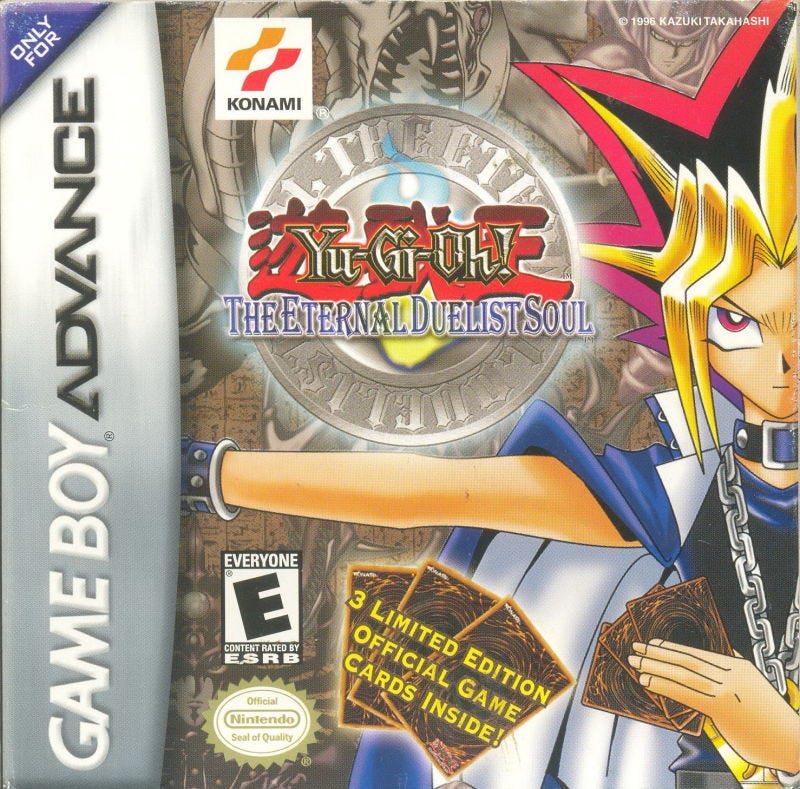
I didn’t think much of Yu-Gi-Oh! video games when the cards were still a major craze. I always preferred my real deck over my virtual one. Real cards were real and usable in tournaments. Now that I’ve long since stopped playing, I find myself returning to the old Game Boy Advance game Yu-Gi-Oh!: The Eternal Duelist Soul. I only first bought the game for the three cards inside, but now I treasure it. At a time when the Yu-Gi-Oh! is unrecognizable from its simpler roots, Eternal Duelist Soul is not only nostalgic, but also an interactive time capsule.
Like Pokemon or Magic: The Gathering, Yu-Gi-Oh! was one of the best trading card games of all time. It could grow to be an expensive hobby, no doubt, but it was inexpensive enough that most people could build their own decks and have fun with them. The implosion of Yu-Gi-Oh! was inevitable, however, given that Konami was constantly trying to push the envelope with newer and faster summoning techniques. The Dark Worlds and the Gladiator Beasts were a sign of things to come, spamming the field with high level cards in only a few turns. Konami also introduced a new summon every cycle: Synchros, Xyzs, Pendulums, Links, etc. The game quickly became too complicated and too fast for many to keep up with. So fast, in fact, that drawing a card on your first turn is now too great of an advantage! Once I entered college, what little money I had went to food and textbooks. I couldn’t afford to keep up with every new booster pack, nor did I even have the time. Maybe I’m just an old curmudgeon, but Yu-Gi-Oh! just isn’t as fun as it used to be. I miss the days when bringing out “Jinzo” or “Dark Magician of Chaos” was a big deal.
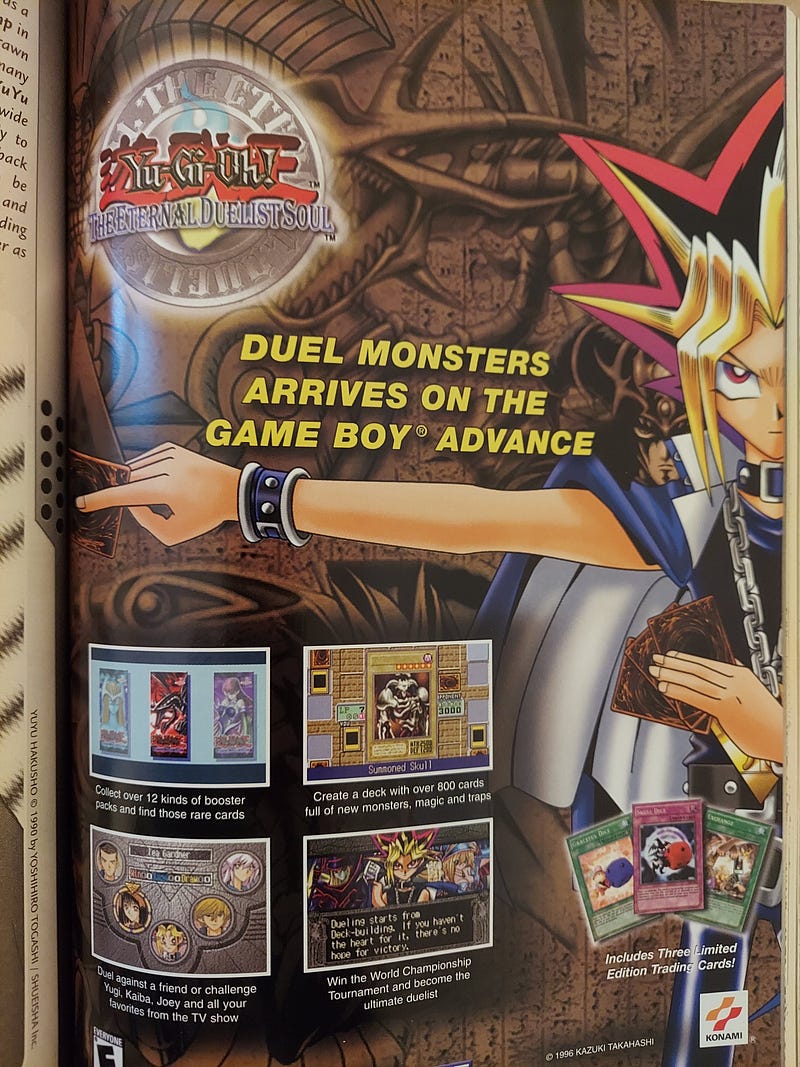
Eternal Duelist Soul was the first Yu-Gi-Oh! video game that tried to replicate the rules of the game. In other words, it attempted to be the most accurate virtual experience of real duels. It came out around the release of the Pharaoh’s Servant booster pack, which introduced favorites such as “Thousand Eyes-Restrict”, “Jinzo”, “Call of the Haunted”, “Imperial Order”, “Ceasefire,” and “Premature Burial.” It also came out during the Domino City arc of the anime, during which the game had begun to evolve into something more strategic and interesting. This was right at one of the sweet spots of the card game.
There isn’t much of a tutorial, but the basic rules of the aren’t that hard to grasp. Each player has 8000 life points and a deck of at least 40 cards. The goal is to get your opponent’s life points down to zero. To do this, you must summon Monster Cards who can inflict damage to your opponent based on their attack points. Spell Cards can help tilt things in your favor by empowering your monsters or reviving them from the grave. Trap Cards can ensnare your opponent’s monsters or stop their spells. This is, of course, an oversimplification, but these are the basic outlines of the original card game. The fact that different types of Yu-Gi-Oh! cards are in different, distinct colors, makes them easier for players to remember: Effect Monsters are orange, Ritual Monsters are blue, Fusion Monsters are purple, and so on.
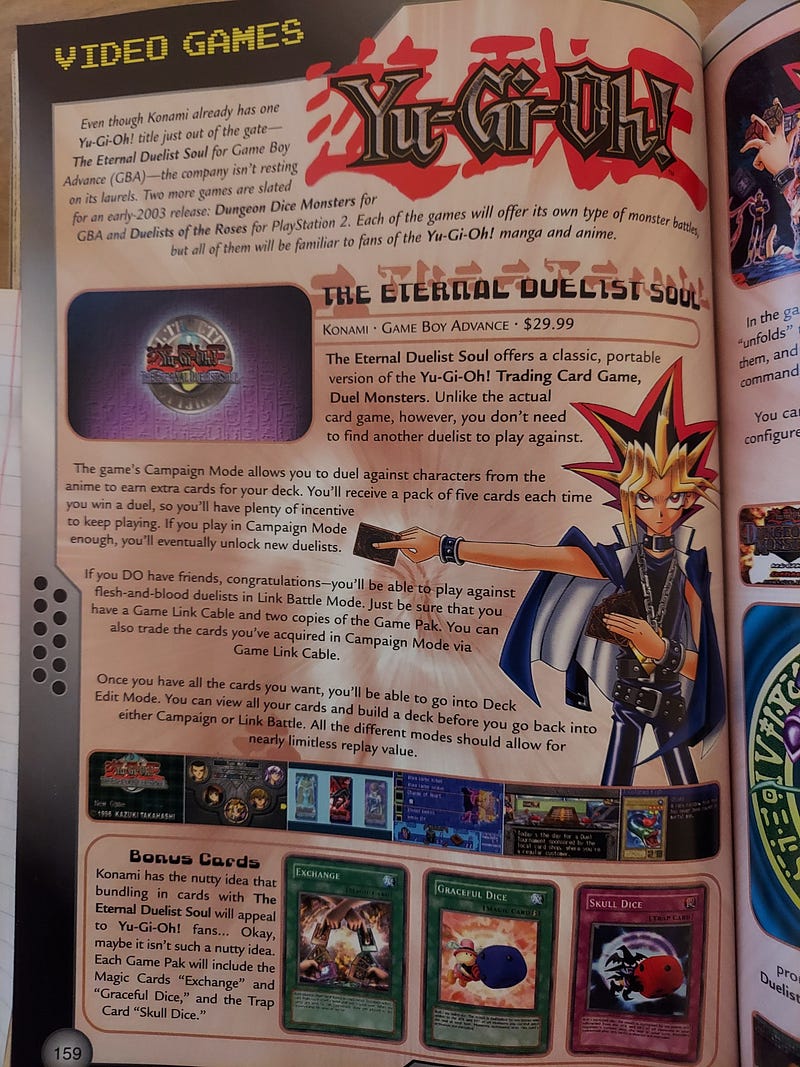
Eternal Duelist Soul lets you challenge most of the iconic characters from the anime, including Yugi, Kaiba, Joey, Marik, and Pegasus. The opponents gradually grow more difficult, and can only be unlocked by beating each group a certain number of times. Of course, the standard deck you are given will only get you so far, and you’ll need to upgrade it with fresh booster packs. The more duels you win, the more packs you’ll be able to open and unlock. Of course, you’ll often pull useless cards, so there is a password feature, that permits you more of the rarer cards with the right passwords.
From here, the player is free to craft whatever kind of deck they want. This was at a time where duelists could use the cards that they liked while still being somewhat competitive. In the real world, of course, the best cards were rare and expensive, but in the game, they are all within your grasp at no cost. If you were like me, there were certain cards and strategies you wanted to use, but the right cards were too elusive, and by the time you got them, they were either banned or too slow for the changing format. With Eternal Duelist Soul, I was, for the first time, able to obliterate my opponent with Exodia or able to have Cyber-Stein to bring out a Megamorphed Blue-Eyes Ultimate Dragon. Once you get into the rhythm in flow of the duels, the game becomes terribly addictive. I sometimes found myself speed dueling during lunch breaks at work. The game also has a great soundtrack, with tunes that will stay in your head long after the duels are over.
In 2020, Eternal Duelist Soul serves as an interesting time capsule. For newer or curious duelists who didn’t experience the game during the early 2000’s, it allows them to go back in time and play Yu-Gi-Oh! as it was first introduced. The game that millions around the world fell in love with. For older duelists, such as myself, Eternal Duelist Soul let’s us play through our memories of the early game, and nostalgia aside, it’s just as fun as I remember.