In Praise of the National Video Game Museum
Keeping video game history alive since 1999
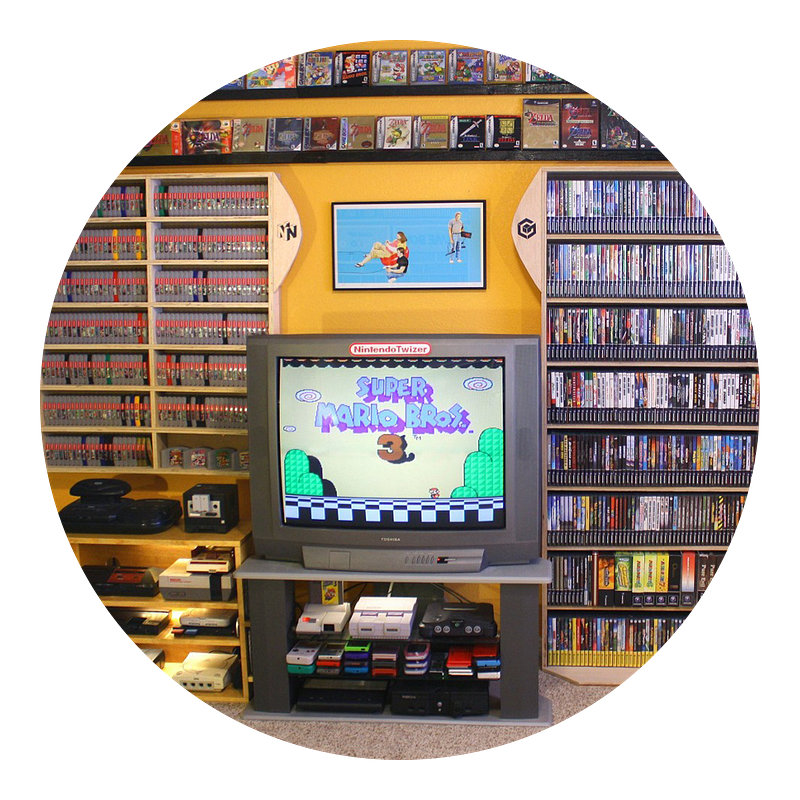
Video games are now recognized as an important part of our popular culture, a measure of our technological progress, and even by some as a form of art. There is also a growing understanding that video games are in need of preservation, with older ones falling into decay or growing scarce. Not only do video games need to be saved for future generations, but the stories of how these games were made and the impact that they had must also be shared. While institutions like the National Videogame Museum could be laughed off as a curious novelty, they help us to keep gaming history alive.
The Origins
The National Video Game Museum has its roots in the annual Classic Gaming Expo, which was first hosted in Las Vegas by John Hardie, Sean Kelly, and Joe Santulli in 1999. It allowed older gamers to play the classic games of their childhood and meet with others who had the same experiences. As the New York Times described it in 1999:
“For those registered at the Classic Games Expo, it was a chance to pore over the video game consoles of yore, to fortify their collections of Coleco vision cartridges, and to hear former Atari employees tell stories from the old days, when they were young and mustachioed and hacking away at Frogger, Pitfall and Tron Deadly Discs. Classic games for classic machines, not like today’s fancy-pants consoles, with their fast processors and 3-D graphics and surround sound, which will never ever ever be as good.
It was a cross between a comic-book convention and a class reunion. Industry veterans caught up with their erstwhile co-workers, while their fans, a generation younger, ogled relics of Reagan-era childhood with a proprietary sense of nostalgia.”
The “Videogame History Museum” soon became a traveling exhibit within the Expo, with Ars Technica calling it “the antithesis of E3”. The site described it as “an assemblage of old arcade cabinets, classic consoles hooked to standard-definition TVs, and gaming curios that you may never have heard of let alone seen.” Such curios included the Atari Mindlink (which purported to use your thoughts to play games), an arcade version of Michael Jackson’s Moonwalker, and Famicom boxes which were sold to Japanese hotel rooms.
Sensing that they needed to make such a convention permanent, a Kickstarter was launched in 2011 to turn the expo into an official museum for video games. The project asked for $30,000 in donations, stating, “The videogame industry is double the size of the music industry and while there are several music ‘halls of fame’ and museums, there isn’t a single dedicated videogame museum. It’s time!”
In September 2014, the Community Development Corporation Board of Frisco, Texas, unanimously voted to approve the creation of the National Videogame Museum in their town. The museum would use 10,400 square feet of the Frisco Discovery Center, and the city would spend an estimated $800,000 on building improvements and extra parking. The museum officially opened in April 2016, becoming the first American museum that was solely dedicated to the history of video games.
The Museum Itself
On its mission statement, the National Videogame Museum (NVM) claims that its goal is to document as much first-hand information as it possibly can about the creation and evolution of the video games industry. They also want to preserve as many physical items as possible. The NVM currently houses 100,000 video game consoles, games, and artifacts, as well as historical documents and data archives that span over a quarter of a century.

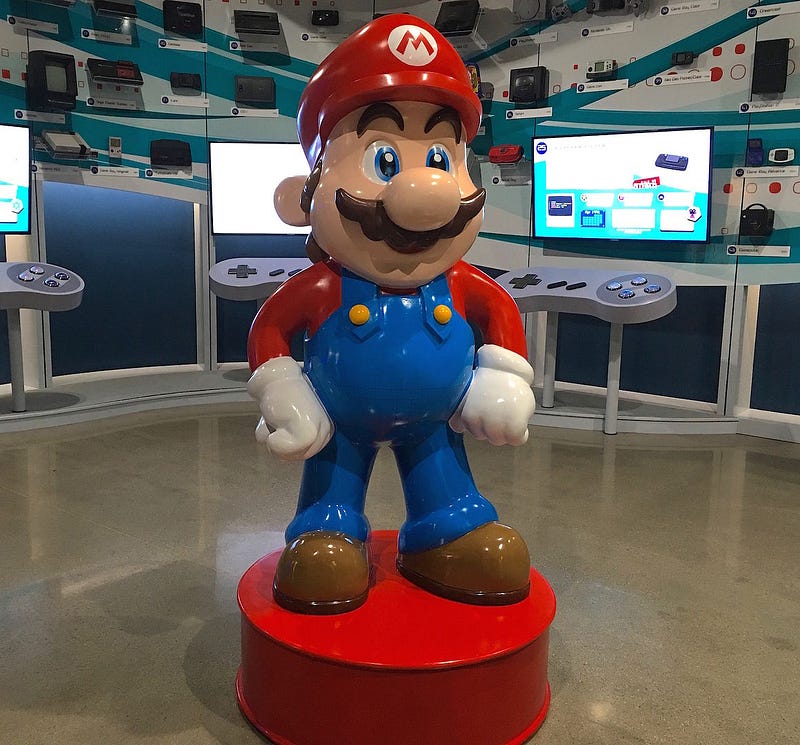
The NVM has numerous ongoing exhibits and a few rotating ones. The ongoing exhibits include a timeline of every video game console ever made behind a smiling Mario statue, an interactive 80’s style arcade called “Pixel Dreams,” educational programs focused on STEM subjects (science, technology, engineering, and math), and what is quite possibly the largest Pong console in the world. The rotating exhibits allow visitors to experience a variety of games with popular characters, like Sonic and Donkey Kong, as well as games that are based around a certain theme, such as driving or the use of a keyboard.
Among the more fascinating exhibits are the recreations of a 1980’s style living room and bedroom, where you can play the Intellivision or the NES on old TVs. The attention to detail here is remarkable. The living room has a tacky couch and a rotary dial telephone, while the bedroom has posters of Madonna and Ferris Bueller’s Day Off. The point of these rooms is to have visitors experience these games as they were originally played. It allows new gamers to travel back in time and older ones to relish in their nostalgia.
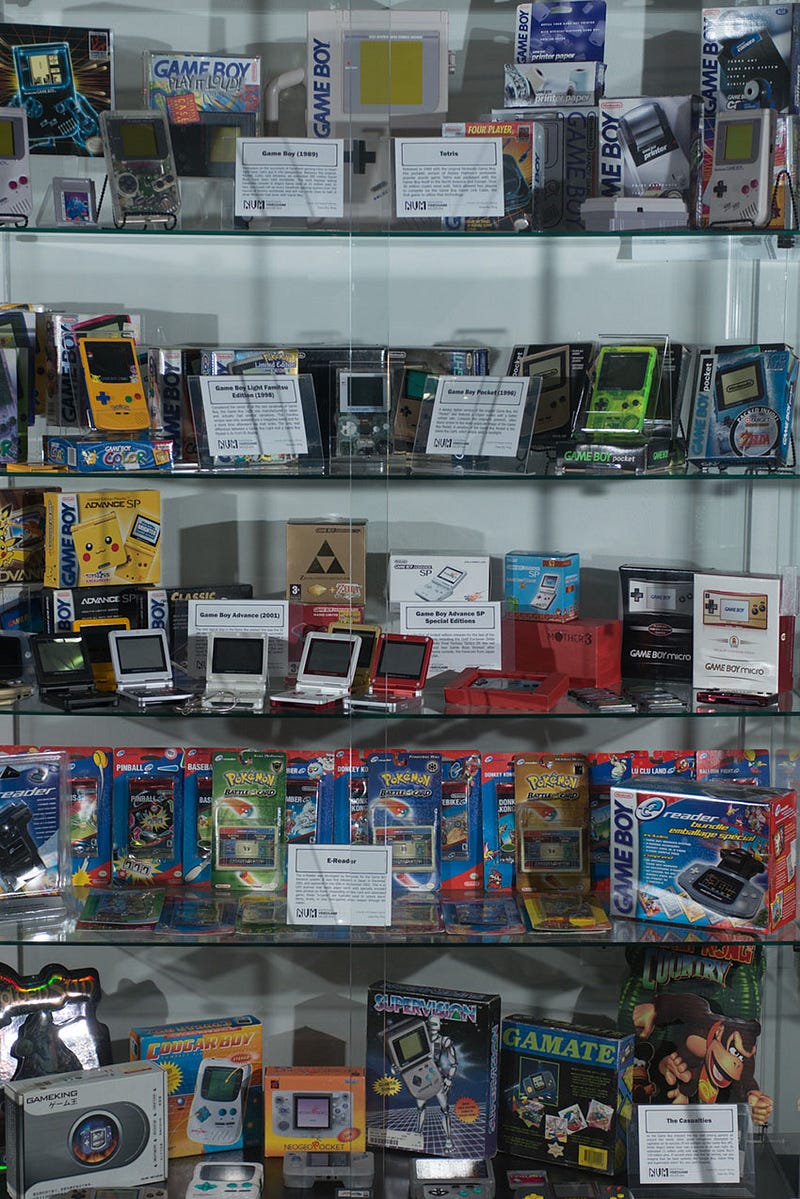
There are also numerous artifacts of gaming’s past on display, including the only Sega Neptune prototype, a rare 1990 Nintendo World Championship cartridge, and one of two known Barbie-themed Game Boys. If there’s an obscure gaming model or accessory that you’ve heard about, there’s a good chance that the museum has it. The NVM also maintains a blog where they share curious trivia about gaming history, such as the fact that an Alien vs Predator football game was almost created for the Sega Genesis.
The Future
Wikipedia has a list of all the video game museums around the world. It’s a small list, with twenty-seven physical museums scattered across several countries. I imagine that this list will grow in the future, to the point where many large cities will have, at least a part of a museum dedicated to video games. That gives us a lot to think about.
Will going on a school field trip to your local video game museum be as common as going to see the old fossil bones? Will the Library of Congress start a National Video Game Registry to preserve the most culturally significant games? Will we hear of game thieves who try to snatch away valuable games like art thieves who pilfer important paintings?

The NVM itself is preparing to one day level up to 2.0 and include new features like a research laboratory and a theater space. It truly is amazing that one of the most fascinating museums in the country began with only a few passionate collectors. The continuing evolution of the NVM shows that how we experience games of the past is constantly changing in new ways, and will continue to surprise us in the future.