When Did Mimi Get So Cute?
“Like most successful children’s franchises, Pokémon has kept its focus forever on the kiddos. Ash and Pikachu’s episodic adventures never…
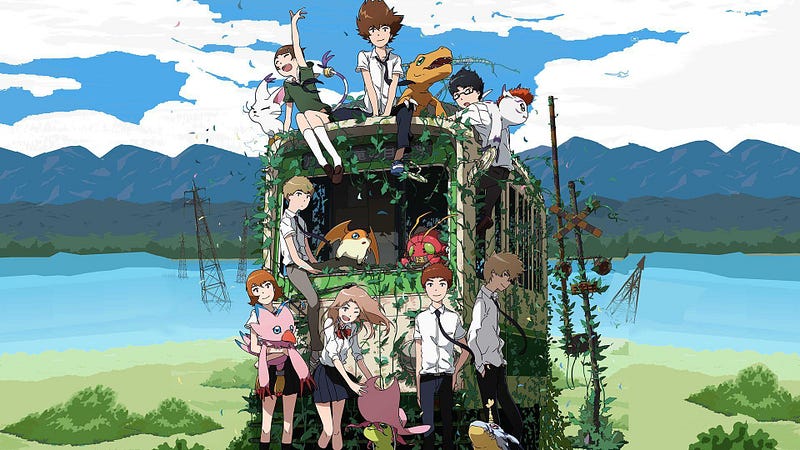
“Like most successful children’s franchises, Pokémon has kept its focus forever on the kiddos. Ash and Pikachu’s episodic adventures never really change and that’s okay, just like Scooby-Doo and Spongebob never need to grow past their eternal status quo. With Toei’s announcement of a Digimon tri movie series, Digimon proved that it had been holding onto a more ambitious kind of strength for over 15 years. It followed the Harry Potter path of cultivating a story and characters that remained meaningful to its fans as they grew from children to teens to adults. Just looking at the poster for Digimon tri yields profound emotions in fans of “coming home” to something years later as a very different person, but with no less love in your heart.”
- Jacob Hope Chapman, “Why We Still Love Digimon”.
We live in an age in which nostalgia is marketable. In the movies, old franchises have received a plethora of new additions, with Prometheus, Jurassic World, Terminator Genisys, and The Force Awakens. This retrophilia is by no means restricted to the United States. In Japan, for instance, older animes such as Fullmetal Alchemist, Neon Genesis Evangelion, Ghost in the Shell, andeven Sailor Moon, have been given fresh blood. In an ideal world, creative anime like Baccano or Spice and Wolf, would be next in line for new material, but alas.
We get another Digimon.
When I heard a new Digimon series was in the works, I didn’t much care. Digimon had long fallen off my radar sometime in middle school during Digimon Frontier, and even then, the formula was getting stale. I’ll grant, Digimon was better than Pokemon, but not by much. While yes, Digimon had more developed characters, more consequential fights, and more mature themes, the plot was still written for eight year olds, cheaply animated, and painfully repetitive. The best thing to come out of Digimon was Mamoru Hosoda, who got his directorial debut in Digimon: The Movie, particularly the first two sections. The Our War Game section still holds up as an impressive showcase of animation, although the additions of American pop music in the English version are hit and miss. Hosoda would later go on to be one of the leading figures in anime, with Summer Wars, The Girl Who Leapt Through Time, Wolf Children, and The Boy And The Beast. He hasn’t returned to Digimon since.
So Digimon Tri caught me off guard, as I wasn’t expecting a quality product, at least one that would hold my interest after the nostalgia wore off. Usually, cheap attempts to cash on my nostalgia end with Michael Bay’s Transformers, but Digimon Tri was no such piece. Whereas the original Digimon aimed its bar low, Digimon Tri is clearly written for young adults, particularly those who grew up with the show. This is what makes the anime so impressive, it uses a kid’s show as its base, but is able to evolve with its fanbase. Not only have the characters matured, but the nature of the series has also matured in form. Try to imagine Pokemon or Doremon doing the same. Can you imagine them starting up reboot films with grown-up versions of Ash or Nobita? I thought not. That Digimon can make this transition into adulthood, and do it well, says some good things about the nature of the original show, as well as the people behind this anime.
My first question after watching the show was, “When did Mimi get so cute?”
Okay, okay, my hormones aside, I was very impressed with the animation. Considering that the original Digimon was of the cheap and tacky animation quality that most children’s shows were, I was pleasantly surprised to see some effort put into this new installment. I know the redesigns of these characters were controversial in some circles, but they appeared to me to have a nice reference to the Hosoda style used in the first film.
The Digidestined are more or less the same as I remember them. Matt is still the cool rock star. Sora’s still undecided. Joe is still obsessed with studying. Mimi’s still a rich ditz. Kari is still the ever dedicated little sister. T.K is, well, T.K. Izzy is still a tech genius. In fact, there’s a fun moment where Matt and Tai get into a fight, and Izzy is too absorbed in his technobabble to notice. So while these traits certainly stand out, they are tamed so the Digidestined don’t become walking caricatures. I enjoyed seeing these characters interact so much, that if the Digimon never showed up, I wouldn’t have cared. This is due to Digimon Tri’s new direction with the series. Whereas the original Digimon focused on the relationships between the Digidestined and their digital partners, Digimon Tri seems to be more about exploring the effects that these relationships have had so many years after. Tai, in particular, is more jaded. Once the typical brave knucklehead, Tai is cautiously fearful of entering the fray. The reason for his new hesitance may be answered by four Digidestined who are notably absent: Davis, Ken, Cody, and Yolei. For some reason, he looks like the only one who’s been affected by their loss. I expect more on this to come. Even the Digimon themselves, which were once center stage, now seem like background furniture. Just notice how little dialogue they are given. They almost seem out of place in this world, like bringing your Pokemon cards to the cubicle. A relic of more innocent times. Regardless, they have an entertaining (if minimal) presence. There’s a scene where they hear the word handsome, and think that it means having a preference for hands. So other suggestions such as head-some and foot-some are brought forth.
Digimon Tri is written for fans, and unapologetic about it. While people unfamiliar with Digimon may find things to like, the richest satisfaction is to be found among those who woke up each Saturday morning to see the next episode. Tri is able to do what Michael Bay and his millions failed to with Transformers, evolve a children’s show into maturity without sacrificing the innocence that made it so appealing in the first place.
Seriously, though. When did Mimi get so cute?
Originally published at http://sansuthecat.blogspot.com on May 10th, 2016.