Iranian Freedom Is Just, This War Is Not
Every American must oppose this war of aggression against Iran. U.S. President Donald Trump and Israeli Prime Minister Benjamin Netanyahu have embarked on a criminal enterprise, the likes of which may reach the horrors of Iraq. These madmen are drunk on war and unless they are stopped, they will plunge the Iranian people into disaster.
Why Be Against The War?
Consider the horror of Trump's genocidal threats against the Iranian people: "A whole civilization will die tonight, never to be brought back again." The leader of a nuclear-armed nation should not be allowed to threaten genocide and get away with it. I don't care if he didn't mean it. You don't joke about that sort of violence. Trump must be removed from power before he can make his threats real.
We should firstly disabuse ourselves of the notion that there was ever anything "humanitarian" about this war. No doubt, the theocratic Iranian regime is repressive and cruel, as it has been since the Islamic Revolution of 1979. Its crimes are myriad: it forces women to wear hijabs, censors the news, subjects Salman Rushdie to constant death threats, severely punishes the LGBT, executes religious minorities, is openly antisemitic, and tortures its dissidents in Evin Prison. Time and again the Iranian people have bravely protested against the regime and have been routinely met with arrests and executions. During the 2025-2026 protests, the government ignored the people's yearning for liberty and is reported to have killed between 6,000 to 30,000 citizens. Iran's foreign policy also has a history of exporting terror around the world, from aiding Bashar Al-Assad's butchering of the Syrian people, to providing munitions for Russia's imperialist invasion of Ukraine, to funding the extreme Hezbollah militants in Lebanon. These facts condemn the Iranian theocracy, but they don't justify this war any more than Saddam Hussein's reign of terror justified invading Iraq.
Why should we believe that Trump and Netanyahu are interested in building democracy abroad when they have no problem dismantling it at home? Trump attempted to forcibly overturn his 2020 election loss, has abused his executive authority to target political opponents, ignores unfavorable court rulings, has dismantled the federal bureaucracy, and has ordered his jackboot thugs to kidnap and kill migrant and citizen alike. Netanyahu is facing charges for bribery and censorship, seeks to weaken the Israeli judiciary, and is overseeing an apartheid state in the Palestinian West Bank.
Why should we believe that Trump and Netanyahu would wage war responsibly when their record shows otherwise? Netanyahu has overseen wars in Gaza in which war crimes were repeatedly committed against Palestinian civilians. He took advantage of 2023 massacres by Hamas to wage collective punishment against every Gazan through human-caused famine, systemic torture, and mass murder. This is to say nothing of Netanyahu's criminal 2024 bombings of civilians in Lebanon. Trump funded Saudi war crimes in Yemen, oversaw an increase of civilian deaths in the ISIS War, murdered Caribbean sailors without warrant, threatened to attack several U.S. allies (Greenland, Canada, Mexico, Vatican City), and pardoned war criminals Eddie Gallagher and Clint Lorance.
The rallying cry of the Iranian protests is "Woman, Life, Freedom." The phrase originated with the Kurdish independence movement, but was adopted by Iranians after their outrage over the death of Kurdish woman Mahsa Amini. She was murdered by the police for improperly wearing her hijab. Even now, Iranian women activists like Narges Mohammadi and Nasrin Sotoudeh are locked up, but why should we believe that Trump and Netanyahu care about women's rights? Trump has been accused by over a dozen women of sexual assault, has appointed judges who overturned a woman's right to abortion, has appointed sex predators to his cabinet (Pete Hegseth, RFK Jr), has repeatedly insulted female reporters, and refuses to release all the government files about his relationship with pedophile Jeffrey Epstein. Netanyahu has overseen a decline in gender equality in Israel, with fears that his judicial reforms may be abused to expand patriarchal religious authority in domestic affairs. Also under his watch, more than 38,000 Palestinian women and girls have been killed in Gaza. His war has also subjected Palestinian women to sexual torture, childbirth in unhealthy conditions, and having their underwear paraded around like trophies.
Why should the American people blindly support another foreign military intervention when our recent track record on that is so poor? Our wars in Afghanistan, Iraq, and Libya brought needless suffering and chaos to the people living there. Afghanistan ended with the return of the Taliban. Iraq ended with the rise of ISIS. Libya ended with civil war. These events should've humbled our militant foreign policy, not emboldened it. America should be avoiding war, not seeking it out.
This isn't to say that recent U.S. military interventions have always been bad. The First Gulf War, the Balkan interventions, and the ISIS War were all arguably justified. Had the U.S. intervened against the massacres in Rwanda and Syria, greater suffering might have been prevented. Even the Libyan cause might've yielded more success if NATO had listened to the Libyans and extended their security mandate. That said, the standard for military intervention should be very high. We have every right to ask our leaders about the necessity of such wars, the chances of victory, the risks of such actions, and the plans afterwards. War is an evil that should never be entered into lightly. It should be avoided if it all possible and only be ventured into as a last resort.
This is why U.S. law and international law matter. Asking for approval before going to war is not a mere procedural gesture. It allows for an open discussion and debate on the aims, necessity, and consequences of such actions. It helps sets a precedent that sovereignty should not be violated unless under the most dire circumstances. It also sets a check on the executive authority from becoming too militaristic. We should not build a world where nations go to war without restraint, nor should such monumental decisions be done without consideration to the law.
Among the various rationales Trump and Netanyahu have put forward for the war, the most well-known is the claim that Iran is seeking a nuclear weapon. A claim for which they have no evidence. Since 1992, Netanyahu has been fearmongering about Iran being only a year or two away from a nuclear weapon. The International Atomic Energy Agency stated in 2026 that while they were concerned about Iran's stockpiling on enriched uranium, they found no evidence that the regime was making a nuclear bomb. In fact, there was already a deal in place to prevent Iran from getting a nuclear weapon. The 2015 deal strenuously negotiated by the U.S., the U.K., Germany, France, Russia, China, and the European Union. Iran was complying with the deal until Trump pulled out in 2018. Iran then tripled its enriched uranium stockpiles. The Iran Deal wasn't perfect, but its critics were never able to propose a viable alternative. In fact, we're seeing the alternative unfold before our eyes.
The Crimes and Their Effects
It's telling that the first day of this war began with a war crime. The U.S. attacked the Minab girls' primary school which killed 175 civilians, most of them children. The U.S. also attacked a sports hall in Lamberd, which killed 21 civilians. 20 civilians were also killed in Tehran's Niloofar Square. Israel even bombed a synagogue during Passover. As of this writing, the U.S.-Israeli strikes have killed 1,701 civilians (including 254 children) and have injured at least 8,600 people. The Red Crescent has found that the U.S. and Israel have bombed 6,668 civilian units, including medical centers. The Israeli bombing of Iran's oil facilities filled the skies of Tehran of toxic black smoke and acid rain, putting the health of many at risk. Is this humanitarian? Will this bring Iran democracy? How are decent people expected to support this?
In its response, Iran has injured and killed civilians in Israel, and has even used illegal cluster munitions. They've also harmed civilians in many Arab nations allied with America. These are also war crimes, but Trump and Netanyahu should've anticipated that an escalation in this conflict would prompt a similar reaction. They failed to properly prepare their Arab allies for this outcome and have damaged their credibility as reliable partners in the region.
An unfortunate result of this war will likely be nuclear proliferation. The message that Trump and Netanyahu have sent is that if you don't have nukes, you won't be safe. If Iran wasn’t already seeking a nuke before, they’d be stupid not to get one now. Good luck convincing Kim Jong Un to get of his nukes after this. He’ll be holding onto them for dear life. Canada, Mexico, and even Greenland might seek nukes to protect themselves from MAGA imperialism. Taiwan might also find it wise to invest in nukes to ward off Xi Jinping's threats. I'm not happy about any of this. I want to see a world without nuclear weapons, but we can't simply tell vulnerable nations to abandon their only guarantee of security from aggressive superpowers. Not until we can give them alternative forms of deterrence.
This war has also revealed the vulnerability of the global economy. Iran has closed the Strait of Hormuz in retaliation to the war, a passage which accounts for 20% of the oil trade. The ensuing result was a massive increase in oil prices. Even if you ignore the need to fuel our vehicles, oil is also used to create the plastics which we rely on every day: for our clothes, cosmetics, medicine, electronic appliances, and even our green energy tech. A third of the world's fertilizer also passes through the Strait, which means its continued blockage could lead to a global food shortage. We mustn't also forget that there are 20,000 seafarers and 2,000 ships stranded in the Strait. How much longer can they endure? Iran's closure of the Strait is in violation of international maritime laws on freedom of navigation, in particular with its placing of mines and the attacks on civilian vessels. That said, this was, once again, a predictable response. In fact, one of Trump's own generals warned him about this very outcome. That Trump clearly didn't plan for this is emblematic of just how poorly thought out this whole war is.
If the major polluters of the world had only gotten their act together and not dragged their feet on decarbonization, then maybe the closure of the Strait wouldn't be so dire. If this crisis isn't a wake-up call to hasten the transition to a green economy, I don't know what is. As climate activist Bill McKibben recently said, "Sunlight has to travel 93 million miles to reach the Earth, but none of those miles go through the Strait of Hormuz." The crisis has also revealed just how thorough the transition will need to be. We must go beyond public transport or energy generation. We must abandon petrochemicals entirely and invest in bioplastics, sustainable farming, plastic reduction, and green fertilizer.
The closure of the Strait has also exposed problems with the current free trade regime. While there is a broad consensus from economists that free trade is beneficial, the global economy should not be so dangerously dependent on a single trade route. To quote the Atlantic Council, "Without deliberate efforts to diversify supply chains, invest in strategic reserves, and reduce dependence on chokepoints like the Strait of Hormuz, the world risks cycling from one costly crisis to the next, each more damaging than the last."
Empathize With The Iranians, Even If You Disagree With Them
We should remember that the primary victims of this war will be the Iranians. They first suffered the bullets from the police and now they will suffer the bombs from above. Neither side in this war truly cares for their welfare, and as to be expected, the Iranians caught in the crossfire are stuck between a rock and a hard place. Many Iranians support the U.S.-Israeli intervention, as they are desperate to finally see an end to a regime that has terrorized them for nearly half a century. For them, this war began in 1979, not 2026. They are aware that it will get ugly, but they hope to make the most of it. As British-Iranian activist Nazanin Boniadi wrote, "many Iranians will continue to live with a painful paradox: hoping that the forces capable of ending their oppression will not also destroy everything they love—and that the world will meet this anguish with empathy, rather than judgment."
We should understand that many of us, were we living under the horrors of the Iranian regime, would also be calling for the U.S.-Israeli strikes. At the very least, we should share in their joy at the deaths of murderers like Ali Khamenei and Ali Larijani. They were evil men with innocent blood on their hands and the world is better off with them gone. Anti-regime Iranian diaspora, especially pro-war ones, have also been targeted with violence by regime sleeper cells. This is all to be condemned and dissidents must be kept safe.
Now, empathy with a people doesn't mean we should uncritically support their every decision. Some may think it wrong to criticize Iranian dissident leaders, given their closeness to the suffering in Iran, and indeed, I'd rather not be in this position. And yet I am an American. This war is being waged in my name and its crimes are being funded by my tax dollars. I can't simply sit back and stay silent about an illegal war being waged by madmen. Solidarity should not mean a refrain from thought and conscience.
Let us be clear. One can empathize with the Palestinian victims of Israeli violence while also condemning its leaders who engage in antisemitism or lend their support to Hamas. One can empathize with the Chinese victims of Uyghur violence, while also condemning the Chinese government's ongoing Uyghur genocide. One can empathize with Salvadorean victims of gang violence who voted for Nayib Bukele, while also condemning the abuses of Bukele's prisons. And yes, one can empathize with intolerable suffering of the Iranians, while also criticizing the judgment of its dissident leaders who aligned their cause with Trump and Netanyahu.
For example, Masih Alinejad is an exiled Iranian journalist who started the "My Stealthy Freedom" campaign, encouraging Iranian women to post pictures of themselves violating the forced hijab laws. She has also faced multiple assassination attempts from the regime for her activism. Even when she met with then-Secretary of State Mike Pompeo during Trump's first term, she criticized the Iranian travel ban. Anyone could admire her courage. Alinejad, though, has become more supportive of Trump after his war, going so far as to smear war critics, like New York City Mayor Zohran Mamdani, of having "sympathy with the killers." (Mamdani criticized the Iranian regime's attacks on protesters shortly after being sworn in). To her credit, Alinejad did criticize Trump's threats against Iran's civilian infrastructure, but nevertheless wants Trump to resume the war. She still asks of us to trust a man who in a fit of anger threatened genocide against her people.
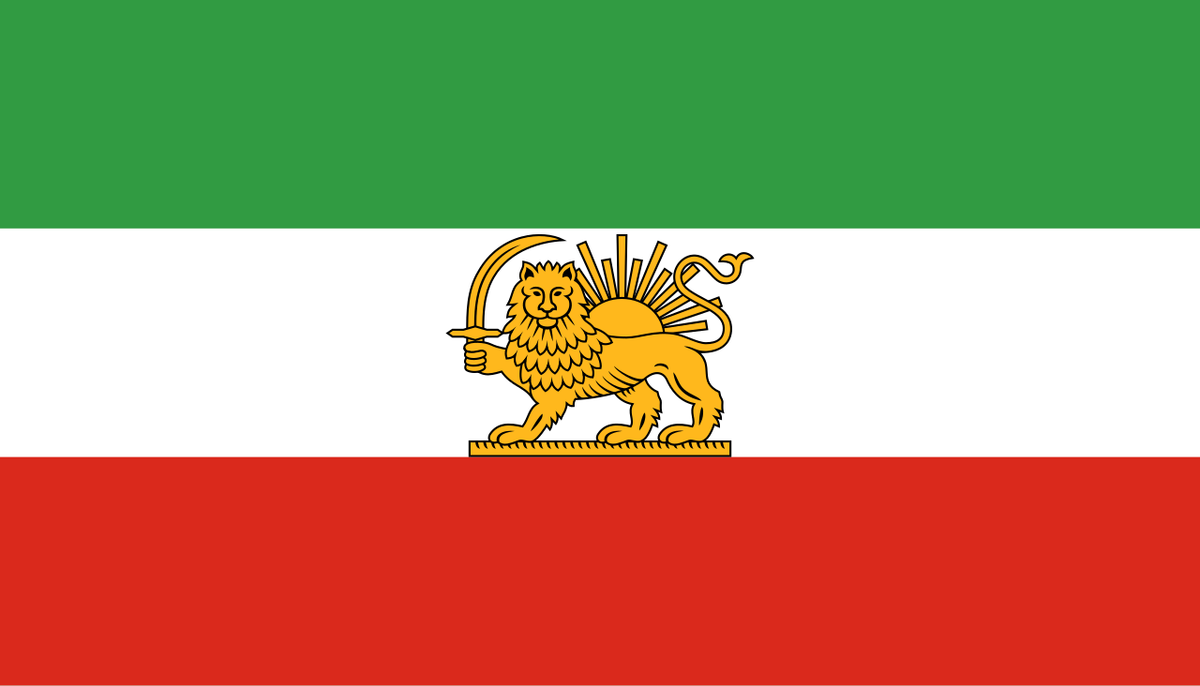
Another example is Reza Pahlavi, the exiled crown prince of the Pahlavi Dynasty that ruled Iran before the Islamic Revolution. Unlike his father, Pahlavi doesn't want to be a dictator, but rather help Iran's transition to a secular democracy. Pahlavi is a popular figure among many Iranians, with the refrain "Javid shah!" ("Long live the king!") heard at many protests. Pahlavi had previously asked Trump to intervene, calling him "a man of his word" and last year had a pleasant meeting with Netanyahu in Israel. It is disappointing, however, that Pahlavi has so far had nothing to say about Trump's arbitrary detainment of Iranian nationals or of Netanyahu's ongoing genocide against the Gazans. Like Alinejad, Pahlavi later asked Trump to spare Iran's civilian infrastructure, but nevertheless has implored Americans to "stay the course." Trump himself doesn't seem to think highly of Pahlavi's chances to lead Iran and still has yet to meet with him. We also learned that Trump and Netanyahu's original plan was to have Iranian ex-president (and Holocaust denier) Mahmoud Ahmadinejad take over after the regime overthrow. If Pahlavi has any sense, he'll reconsider these dishonest allies.
Now, one could defend Pahlavi's silence on Trump and Netanyahu's terrors as pragmatic. After all, South African freedom fighter Nelson Mandela was also silent on the many crimes of Cuba's Fidel Castro and Libya's Muammar Gaddafi as he courted their support against apartheid. Nor did Polish dissident Lech Walesa ever criticize the savagery of America's Ronald Reagan, whose support was vital to his Solidarity movement against Soviet Communism. Diplomacy is always a tricky matter and the oppressed often have little choice in which allies they can choose. Pahlavi has my sympathies, but Castro, Gaddafi, and Reagan, however one feels about them, were at least true to their word. The same cannot be said for Trump. Pahlavi should recall his betrayals of Venezuela and Ukraine.
Consider the Venezuelan opposition leader María Corina Machado, a conservative ally of Trump's. She believes that Venezuelan dictator Nicolás Maduro rigged the 2020 U.S. election against Trump, supports his illegal murders of suspected "drug traffickers" in the Caribbean, and has said little on his deportations of Venezuelan refugees to Bukele's abusive prisons (though she claims to have defended them behind-the-scenes). Machado dedicated her Nobel Peace Prize to Trump, praising his kidnapping of Maduro as "the day justice defeated tyranny." An act which simply replaced Maduro another dictator of his own party, but who is much more open to giving Trump oil. Something which Trump said was his main purpose all along. It remains to be seen if any of this proves beneficial to the Venezuelans. It hardly deserved Machado humiliating herself by awarding Trump her Peace Prize. Trump, for his part, never considered supporting her to lead the country and for all her shameless genuflection, has given her little more than a gift bag. Even after this blatant betrayal, Machado still supports Trump and even refuses to meet with left-wing leaders like Spain's Pedro Sanchez.
Look also to Ukraine's beleaguered Volodymyr Zelenskyy. He once saw the U.S. as a reliable ally during the Biden years. That changed under Trump, who repeatedly promised to end the Russo-Ukrainian War within 24 hours. The administration hasn't been shy about its frustration with Ukraine's refusal to accept peace at any price. Hegseth called a return to Ukraine's pre-2014 borders unrealistic. Trump's initial 2025 negotiations with Russia excluded the Ukrainians. Trump has also called Zelenskyy a dictator and has blamed Ukraine for the Russian invasion. Trump and Vice President J.D. Vance even publicly cornered and bullied Zelenskyy at the White House, accusing him of "gambling with World War Three." The fallout prompted Hegseth to briefly pause arms shipments to Ukraine, which Trump hastily stepped in to reverse. Unlike Machado, Zelenskyy seems to have wizened up to Trump's unreliability. He talks more about European self-defense and less about American salvation. Referring to Trump's threats against Greenland, he said to Europe, "It seems like everyone is just waiting for America to cool down on this topic, hoping it will pass. But what if it does not? What then?"
The aforementioned Boniadi has been careful to note that the respected Iranian activists Nasrin Sotoudeh and Shirin Ebadi only called for the U.S. to lead an international coalition and carefully target regime figures. That may have been a worthwhile plan, but that's not what's happening. A fact that should've been obvious given Trump and Netanyahu's record. You can't ask known arsonists to put out fires and then act surprised when they start pouring gasoline.
Does The Western Left Support The Iranian Regime?
Boniadi has also chastised progressive critics of Trump's war for "caring more as to whose hands are on the trigger" than about human lives, while Alinejad asked that we "put aside our political differences" to support this war. These sentiments would otherwise be noble in certain circumstances, but now read as oblivious.
The idea that Trump's weak temperament, record of foreign policy failure, penchant for lying, disregard for the law, ignorance of expertise, and racial hatred will have little bearing on the success or failure of this war is ridiculous. The president is not simply an empty vessel which we can mold to our will. He has an agency all his own which is far from negligible in so fragile a situation. In any event, the Democrats have no real power to restrain or advise Trump in any capacity, and if he was interested in working with them he would've sought congressional approval. The idea that we should ignore legitimate questions and concerns about the war and hope for the best from a racist authoritarian is a recipe for disaster.
If Iranians are frustrated that more people in the U.S. and abroad aren't supportive of this war, then the ones to blame for that are Trump and Netanyahu. Trump has spent his second term alienating his allies through threats of invasion, coercive tariffs, defunding vital USAID, withdrawing from climate treaties, and denigrating the EU and NATO. Trump turned many of his own citizens against him by pardoning the Capitol insurrectionists, terrorizing our communities with violent ICE raids, demonizing trans people, needlessly deploying federal troops to Democratic-led cities, degrading public health through anti-science measures, denying federal aid to disaster-hit states, and attacking any free speech he doesn't like. Netanyahu, meanwhile, has damaged Israel's reputation by waging endless war against the Palestinians with limitless depravity, and using the Iran War as a springboard to terrorize the Lebanese by wiping out their villages.
Whatever good faith that these two might've had has long been exhausted. Is it truly that surprising that decent people don't trust these two to lead a war? Is it understandable now why calls to "ignore our political differences" ring hollow? Is it not expected that people are loathe to align themselves with a war that began with a careless massacre of schoolchildren?
Again, we've seen this movie before. Where in the aftermath of a tragedy, be it 9/11 or 10/7, we are asked to abandon critical thinking and blindly throw ourselves into a war led by men of questionable judgment. Anyone who dares to inquire about the necessity, aims, and conduct of such wars is slandered as a terrorist sympathizer. There are brutal regimes around the world, from Saudi Arabia, to Egypt, to Myanmar. America isn't going around invading those nations not because we don't care, but because we recognize the practical limits of using military force to solve all the world's problems. Our recent history has taught us as much.
To be sure, there are useful idiots on the "anti-imperialist" left who support the Iranian regime due to a reactionary opposition to the U.S. and Israel. Writers Against War on Gaza defended the regime as "a pillar of regional defiance to foreign hegemony." Some radical left groups attended a vigil for Khamenei. Mirah Wood, a leader in the Democratic Socialists of America, has praised the Iranian police for defending their sovereignty against the U.S. and Israel. This is all very disheartening, but it isn't representative of how many Western liberal and leftist critics feel about the Iranian regime.
Here are a few counterexamples. Liberal pundit Rachel Maddow highlighted Trump's failure to properly facilitate a populist uprising in the war: "You might have taken steps to turn the internet back on in Iran so the people there could reach each other and the world, and so the world could reach them too." Socialist writer Ben Burgis noted in his opposition to the war that, "Iran’s theocracy massacred socialists and communists when it first came to power, has enforced gender apartheid for decades, and, though hard numbers are hard to come by, has doubtless massacred large numbers of protesters." The communist parties of Iran, the U.S., and Israel all made a joint statement against the war which acknowledged the Iranian struggle against tyranny: "true liberation and salvation from reactionary and authoritarian regimes and their change can only come with the action of the people and patriotic leadership – not from Washington or Tel Aviv." One can disagree with these critiques, but they hardly amount to Ayatollah apologetics.
Many Iranian activists have also criticized the apparent silence of many Western liberals and leftists about the 2025-2026 Iran protests and the ensuing massacres. It is true that many liberals and leftists, particularly politicians, could have done a better job in speaking out more decisively during the recent protests. The reasons for this failure, I think, are a little more complicated than "liberals hate the West" or "progressives support Iran."
We should recall that many Western liberals and leftists did support the Iranian people during the 2022-2023 Mahsa Amini protests. From politicians like Joe Biden, Barack and Michelle Obama, Bill Clinton, Kamala Harris, and Justin Trudeau, to journalists and pundits like Ali Veshi, Melissa Harris-Perry, Liza Featherstone, and Ben Burgis, to activists like Cornel West, Gloria Steinem, Jody Williams, and Greta Thunberg, to celebrities like Oprah Winfrey, Bella Hadid, and Leah Remini. I don't find it plausible that the Western Left suddenly turned apologist for Iran in the years since. Indeed, statements of support for the 2025-2026 protests were made by Alexandria Ocasio Cortez, Pedro Sanchez, Gavin Newsom, and Bernie Sanders.
Still, if this feels a little more muted than before, then it's likely because many (in the U.S. at least) have their hands full resisting the Trump regime and may not have as much time to spare on other important issues. Protesters in general tend to prioritize issues native to their country. The issues on which they know most about and can be the most effective. It would be hypocritical not to first address our own crimes before criticizing the crimes of others. The reason why Gaza is such a lightning rod for U.S. protest is because our tax dollars are funding the atrocities there, and we are uniquely positioned to help stop them. (Even then, it took decades for pro-Palestinian protest to materialize on this level). Again, this bias is not without its problems and we can certainly do better, but a lack of protest doesn't always mean indifference.
Of course, Western liberals and leftists aren't the only ones who have been hypocritical here. Some of the Iranian activists praising Trump and Netanyahu have also been inconsistent or selective their human rights advocacy. (Indeed, supporting those two leaders already makes the ethics of any "human rights" activist suspect). Iranian activist Sana Ebrahimi has criticized war opponents, yet she herself has taken a number of reactionary positions. Such as her denial of the UAE's documented role in the massacres in Sudan, her mockery of critics of Trump's authoritarianism, and her defense of the illegal deportation attempt of Mahmoud Khalil. Boniadi asks where the college campus protests were on Iran. That's a fair critique, but did she ever defend these college activists when they were subject to violence, intimidation, and kidnapping over Gaza? Some even deny the crimes of this war altogether, like British-Iranian comedian Omid Djalili, who said that the Minab girl's school massacre was faked by the Iranian regime. Is this the price of solidarity? To look the other way at the evils of Trump and Netanyahu and hope that human rights will come from its proudest violators?
We should also recall that the Iranians are not a monolith. There are many critics of the regime who are also opposed to the war. The diaspora is divided. Some of these anti-war Iranians include Arizona Representative Yassamin Ansari, religious scholar Reza Aslan, journalist Yashar Ali, activist Hoda Katebi, feminist Maryam Namazie, blogger Ariana Jasmine, editor Adrienne Mahsa Vakirani, journalist Borzou Daragahi, Persian studies professor Aria Fani, and public intellectual Asfin Matin-Asgari. These Iranians complicate the simple narrative that "anti-war" equals "pro-regime."
If the "anti-war" Iranians appear smaller than the "pro-war" camp, that's because critics are subject to threats and harassment from within the diaspora. Pahlavi may well be the man most Iranians want, but he has also cultivated a kind of cult of fanatics who will aggressively bully anyone who criticizes him or the war. This is not limited to online. At public events, Iranian dissidents who don't shout, "Long live the king!" are often threatened by Pahlavists with violence. One such critic of Pahlavi, Masood Masjoody, was murdered by two of his followers. While Pahlavi rejects political violence, an investigation by Politico's Nahal Toosi found that he's done little to rein in the thuggish tone of his top aides. While RealClearWorld's Alierza Nader found Pahlavi's belief in democracy to be sincere, his "ultra-nationalist advisors have little respect for democracy or tolerance for the slightest opposing views."
Pahlavi comes off as a decent man, but I wish he'd do more to stop his abusive followers. These attempts by his aides to silence any dissent within the diaspora reminds one of his dictator father, Shah Mohammed Reza Pahlavi, whose secret police, SAVAK, kidnapped and tortured thousands of political prisoners. In fact, it was the dissatisfaction with the Shah's oppression that drove many secular leftists to foolishly support the ill-fated Islamic Revolution. If Pahlavi is able to lead the Iranians to liberal democracy, then we owe him our thanks and support. I can't imagine his rule being any worse than the Islamic Republic, but still, I am wary of movements that try to suppress and demonize good-faith criticism instead of sincerely engaging with it.
Woman, Life, Freedom
The cause of Iranian freedom is just. No less just than the cause of Ukrainians, Tibetans, Venezuelans, Kurds, Uyghurs, Sudanese, Sahrawis, Burmese, Congolese, and Palestinians, but I remain skeptical that Iranian liberation will come from thugs like Trump and Netanyahu. Choosing a side in this war is to choose which genocidal fascist you'd rather support. It's a losing game. As the Palestinian Arab Spring activist Iyad El-Baghdadi wrote, "Real progress demands slow, strategic, trauma-informed organizing - not shortcuts through collaboration with genociders and predators."
At this point, it's clear that assassinations and bombing alone won't end the regime. Unless an army is willing to engage in a prolonged land war, it's unlikely that the government will be removed. U.S. forces could do that, but Iran is much bigger than Iraq or Vietnam, and its government won't be ended by the removal of a single leader. It will be an ugly slog. As journalist Diana George explained in TimesNow, "A full ground invasion would mean a huge risk for the US and Israel, as it would mean dealing with treacherous terrain, a large and capable armed force, complex proxy networks, and a population that is deeply nationalistic and unlikely to welcome foreign occupation." Can we really trust Trump to lead a years-long ground invasion when he has no clear strategy for victory and no respect for international law?
In lieu of an invasion, the U.S. could also arm the Iranian people to overthrow the government themselves. The CIA had plans to arm the Iranian and Iraqi Kurds, but the Kurds are wisely skeptical of U.S. support. The U.S. has an ugly history of abandoning the Kurds when convenient. The most recent example being when the U.S. troops in Syria abruptly withdrew in 2019, exposing Syrian Kurds to a Turkish onslaught that slew many civilians. The man in charge when this happened? Trump. So it isn't surprising that the Deputy Prime Minister of Iraqi Kurdistan refused to get involved in the war and cautioned his Iranian brethren against fighting. It also doesn't help that Trump falsely blamed the Kurds for stealing arms for the Iranian opposition or that Pahlavi and the Kurds can't seem to agree on what a free Iran should look like.
If we end this war, which I pray is soon, we cannot simply leave the Iranians to suffer abuses of a vengeful and hardened regime. Right now, under cover of war, the Iranian regime is rapidly executing its own citizens on false charges. It would be wrong to lift all sanctions and not place any consequences on regime officials. We need to put pressure on the regime to free political prisoners, stall executions, defend women's rights, and have a dialogue with the opposition. This is a hard sell, obviously, but it's better than doing nothing. There must also be a safe process for Iranians who want to leave to claim asylum or refugee status, and America should bear the weight of accepting the vast majority. Finally, we need keep Iranian dissidents safe and crack down on any regime sleeper cells.
The Iranian people deserve freedom, equality, and democracy, but it seems unlikely that this war will give them those rights. They deserve so much better. The Iranians may yet be able to make good out of a terrible situation. Maybe this war will lead to their freedom. Who knows? I've been wrong before, but my conscience cannot allow me to support a poorly-planned war led by evil men.
I hope there can be true solidarity between our shared struggles. That Iranians, Israelis, Americans, and Palestinians will come to realize that we are all up against the same tyrannical forces. I think back to the great Iranian dissident and feminist Maryam Nayeb Yazdi, who made the connection between the protests against police killings of American George Floyd and Iranian Neda-Agha Soltan:
"Whether in Iran or the United States, it is not enough to create spaces for public dissent. Protesters in both countries need to turn the momentum of public outrage into tangible action with concrete demands. When individuals recognize their own power, this can lead to the kind of collective action and empathy needed to sustainably upend structures of oppression.
Only then will there be justice for the Neda Agha-Soltans and George Floyds of the world."
Free Iran.